Best Liniments for Horses 2026: Senior Joint Relief
Compare 6 horse liniments for 2026: warming and cooling menthol formulas for topical relief of sore muscles and stiff aging joints in senior horses after work.
Older horses get stiff and sore, the same as older people do. Years of work, arthritic joints, and tired muscles can leave a senior moving carefully on a cold morning or after a session under saddle. A liniment is a simple topical tool for everyday comfort: warming and cooling formulas create a soothing sensation on the skin and increase local blood flow, which many owners use to ease a stiff back, tired legs, or an achy older joint after work. It is comfort care, a way to help an aging horse feel a little looser.
We compared widely available equine liniments using their ingredients, warming or cooling action, format, intended use, value, and the recurring themes in verified owner reviews. We did not run our own trials. This is a research-based guide spanning classic warming gels, fast-acting menthol formulas, a budget option, and an alcohol-free choice for sensitive skin. A liniment offers surface comfort only: it does not cure arthritis, treat lameness, or replace veterinary care. Use it on clean, intact skin, patch-test sensitive seniors, and lean on your vet and farrier for any true soundness problem.
Best Liniments for Senior Horses 2026
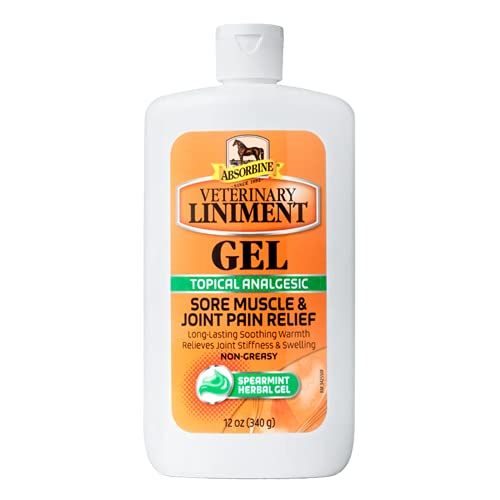
Absorbine Absorbine Veterinary Liniment Gel
Classic warming gel long trusted for soothing sore muscles and stiff arthritic joints.

Vetericyn Mobility Horse and Rider Liniment
Menthol-based fast-acting formula for cooling relief on tired, sore senior muscles.

Farnam Farnam Vetrolin Horse Liniment
Versatile liniment for muscle soreness and stiffness, used as a brace or in a rinse.

Vita Flex Vita Flex Thermaflex Liniment Gel
Budget-friendly warming gel for everyday relief of tired, stiff senior muscles.

Four Oaks Farm Ventures Four Oaks Natural Release Muscle Spray
Alcohol-free and menthol-free spray made for sensitive, thin aging skin.

Absorbine Absorbine Veterinary Liniment Gel (2-Pack)
Value two-pack of the classic warming gel to keep one at the barn and one at home.
How Do These Liniments Compare?
| Liniment | Type | Notable Feature | Best For |
|---|---|---|---|
| Absorbine Veterinary Gel | Warming gel | Classic, trusted formula | Everyday stiff joints |
| Vetericyn Mobility | Cooling menthol | Fast-acting relief | Fresh muscle soreness |
| Farnam Vetrolin | Brace/rinse | Versatile uses | Brace or rinse routines |
| Vita Flex Thermaflex | Warming gel | Lowest price | Budget everyday use |
| Four Oaks Natural Release | Spray | Alcohol and menthol free | Sensitive aging skin |
| Absorbine Gel (2-Pack) | Warming gel | Value two-pack | Stocking barn and home |
How We Picked These Liniments
This is a research-based comparison, not a hands-on trial. We looked at each liniment's ingredients and whether it warms or cools, its format and intended use, value for the price, and the consistent patterns in verified owner reviews. We included classic warming gels, a fast-acting menthol formula, a versatile brace-or-rinse product, a budget option, and an alcohol-free choice for sensitive skin, so owners can match a formula to their senior. We paid attention to skin gentleness, since aging skin can be thin and reactive. We make no medical claims. A liniment is comfort care only, and we recommend your vet's guidance for any true lameness or persistent soreness.
A Closer Look at Each Liniment
Absorbine Veterinary Liniment Gel
Absorbine's veterinary liniment is a longtime barn staple, and the gel form is our top pick for everyday senior comfort. The warming action soothes sore, tired muscles and the stiffness many older horses feel around arthritic joints, and the gel stays where you put it rather than running off. Owners reach for it after work or on stiff mornings to help an aging horse feel a little looser. Apply it to clean, intact skin and keep it clear of the eyes and any broken skin. It is affordable, familiar, and dependable.
Pros: Trusted classic, soothing warmth, gel stays put, affordable.
Cons: Comfort only, not a treatment; warming formula needs care on thin skin.
Vetericyn Mobility Horse and Rider Liniment
This menthol-based liniment delivers a fast-acting cooling sensation that many owners like for fresh muscle soreness or to brace a senior's legs after work. The bright, tingling feel can be refreshing on tired areas, and menthol formulas are a popular alternative for horses that respond better to cooling than warming. It is a good option to keep alongside a warming gel so you can match the sensation to the day. As always, apply to clean, intact skin, avoid the eyes and broken skin, and patch-test a sensitive senior first.
Pros: Fast-acting, cooling menthol feel, good for fresh soreness and bracing.
Cons: Menthol can be strong on sensitive skin; comfort only, not a cure.
Farnam Vetrolin Horse Liniment
Vetrolin is a versatile liniment used for muscle soreness and stiffness, and its flexibility is its strength: owners apply it as a brace or add it to a rinse to refresh a horse after work. That makes it handy for a senior that benefits from a soothing leg brace or a cooling post-work rinse over larger areas. The versatility lets one bottle serve several routines. Follow the label for dilution and use, keep it on clean, intact skin away from the eyes and broken skin, and test reactive skin before broader use.
Pros: Versatile brace or rinse, good for muscle stiffness, covers larger areas.
Cons: Requires following dilution directions; surface comfort only.
Vita Flex Thermaflex Liniment Gel
For owners watching the budget, Thermaflex is a warming gel that delivers everyday relief for tired, stiff senior muscles at the lowest price on the list. It is a sensible pick if you want the soothing warmth of a gel without paying premium money, or as a second tube to keep in a convenient spot. The lower cost makes it easy to use regularly through a stiff season. As with any warming formula, apply it to clean, intact skin, avoid sensitive areas, and patch-test a thin-skinned older horse before broader use.
Pros: Lowest price, soothing warming gel, easy for regular everyday use.
Cons: Warming formula needs care on thin skin; comfort only, not a treatment.
Four Oaks Natural Release Muscle Spray
This spray stands out for being alcohol-free and menthol-free, designed for sensitive, thin aging skin that can react to stronger conventional liniments. For a senior whose skin flares with menthol or alcohol-based products, a gentler formula offers comfort without the sting, and the spray format makes it easy to apply over larger or hard-to-reach areas. It is the kind tool for delicate older horses. As always, apply to clean, intact skin away from the eyes and broken skin, and a quick patch test is still wise even with a gentle product.
Pros: Alcohol and menthol free, gentle on sensitive skin, easy spray application.
Cons: Higher price; gentler formula still offers comfort only, not a cure.
Absorbine Veterinary Liniment Gel (2-Pack)
This two-pack of the classic Absorbine gel is the practical way to stock the liniment you trust, with one tube at the barn and one at home, or simply a backup so you never run out. For owners who already rely on Absorbine for an arthritic senior, buying the pair is more economical than single tubes and keeps relief always within reach. You get the same soothing warming gel that earns our top pick, just in greater supply. Apply it to clean, intact skin and keep it clear of the eyes and any broken skin.
Pros: Value two-pack, trusted warming gel, convenient to keep spares.
Cons: Only worthwhile if you use Absorbine; warming formula needs care on thin skin.
Using Liniment Safely on a Senior Horse
A liniment is a helpful comfort tool when used thoughtfully. Keep these points in mind for an older horse.
- It is comfort, not a cure. Liniment eases everyday stiffness on the surface; it does not treat arthritis, heal injuries, or fix lameness.
- Never on open skin or near eyes. Apply only to clean, intact skin and keep it well away from wounds, the eyes, nostrils, and mouth.
- Patch-test thin aging skin. Try a small amount on one spot first and stop if you see redness or irritation, especially with warming or menthol formulas.
- Do not mask lameness. Persistent or worsening soreness needs a vet exam, not a topical that lets a horse push through a real problem.
- Pair with a real plan. For an arthritic senior, use liniment alongside the joint support, anti-inflammatories, or care your vet recommends, not in place of them.
A liniment supports an older horse's everyday comfort but is not a substitute for veterinary care or proper treatment of lameness and injury. If your senior is persistently sore, swollen, or off, involve your vet rather than relying on a topical. This guide is educational and complements, but does not replace, advice from your veterinarian and farrier.
Related Senior Horse Guides
Frequently Asked Questions
What does a liniment actually do for an older horse?
A liniment is a topical product that provides temporary comfort to sore, tired, or stiff muscles and the soft tissue around aging joints. Warming and cooling formulas create a sensation on the skin and increase local blood flow, which many owners find soothing for an arthritic senior after work or on a stiff morning. It is comfort care, not a cure. A liniment does not fix arthritis or repair a joint, so think of it as a way to ease everyday stiffness rather than treat a real injury.
What is the difference between warming and cooling liniments?
Warming liniments create a gentle heat sensation that many horses find soothing on tight, tired muscles, often used after work to relax sore areas. Cooling or menthol-based liniments give a refreshing, tingling feel that owners like for fresh soreness or to brace a horse's legs. Neither truly heats or cools the deep tissue much; the effect is mostly on the skin and surface. Choice often comes down to what your horse responds to best. Some seniors prefer the soothing warmth, others the bright cooling sensation.
Can I use liniment on an open wound or near my horse's eyes?
No. Liniments are for intact skin only. Never apply them to open wounds, cuts, broken skin, or raw areas, and keep them well away from the eyes, nostrils, and mouth, since the ingredients can sting and irritate sensitive tissue badly. If your senior has a cut or sore that needs attention, that is a job for proper wound care and your vet, not a liniment. Read the label for each product's specific cautions and avoid sensitive areas entirely.
Should I patch-test liniment on a sensitive senior horse?
Yes. Aging skin can be thinner and more reactive, so before applying liniment over a large area, test a small amount on one spot and wait to see if any redness, heat, or irritation develops. This is especially important with warming formulas and on horses prone to skin sensitivity. If you see a reaction, rinse the area and stop using that product. A simple patch test protects a senior from a whole-leg or whole-body irritation and helps you find a formula the horse tolerates well.
Will a liniment fix my horse's lameness?
No. A liniment offers surface-level comfort and should never be used to mask or push through true lameness. Lameness signals a real problem in the muscle, joint, tendon, ligament, or hoof that needs diagnosis, not a topical that makes a horse feel a little better while the underlying issue continues. For an older horse, persistent or worsening lameness warrants a veterinary exam and a proper plan, which may include joint support or anti-inflammatories your vet prescribes. Liniment is comfort care alongside that plan, not a substitute for it.
How often can I apply liniment to an arthritic senior?
Follow the directions on the specific product, since concentrations and uses vary. Many owners apply liniment after work or on stiff days, and some use a gentle brace or rinse routine. Avoid overusing strong warming formulas on thin senior skin, and always work on clean, intact skin away from sensitive areas. If you find yourself reaching for liniment constantly because a horse is always sore, that is a sign to involve your vet about managing the underlying arthritis rather than relying on a topical alone.
Need more help with your senior horse?
Browse our guides by topic to find practical solutions.
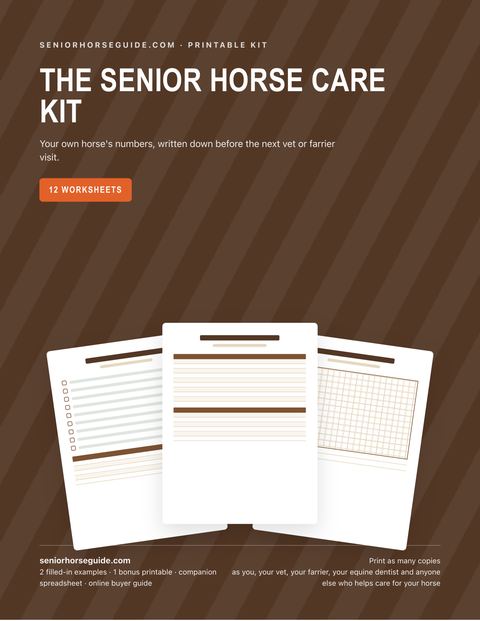
Senior Horse Care Kit: $24