Best Cushing's & PPID Supplements for Horses 2026
Compare metabolic support supplements for senior horses with Cushing's (PPID), insulin dysregulation, or laminitis history, plus why pergolide and diet come first.
PPID, the condition most owners still call Cushing's disease, is one of the most common hormonal disorders of older horses. It comes from a dysfunction of the pituitary gland and shows up as the classic long, curly coat that will not shed, along with muscle loss, lethargy, increased drinking, and a frightening tendency toward laminitis. Many of these horses also have insulin dysregulation, which compounds the risk to their feet. It is a serious, lifelong condition, and getting the basics right matters more than any single product.
Let us be direct before going further: the only proven treatment for PPID is the prescription medication pergolide (Prascend), and the foundation of metabolic management is a low-sugar, low-starch diet your vet designs. Supplements do not replace either one. What the products below aim to do is support related goals like metabolic balance, antioxidant status, and hoof comfort, on top of veterinary care. We compared them using their ingredient panels, intended purpose, and verified owner feedback, not our own trials, and we strongly recommend involving your vet before adding anything.
Metabolic Support Supplements for PPID & EMS Horses 2026

Heiro Healthy Equine Insulin Rescue (30-Day)
Herbal blend with magnesium and vitamin E aimed at supporting normal metabolic function and hoof comfort.
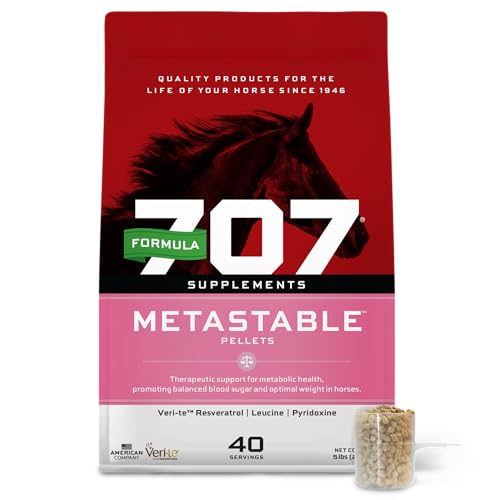
Formula 707 MetaStable Pellets for Horses
University-studied pelleted support for horses with laminitis, insulin resistance, and metabolic disorders.

Equine Veterinary Essentials MetaboBalance Metabolic Support Powder
Daily powder formulated to support horses managing laminitis, PPID, and insulin resistance.

SU-PER Chasteberry Liquid Supplement (1 Quart)
Vitex chasteberry liquid that some owners use to support coat and pituitary-related demeanor.

SU-PER Chasteberry Liquid (1 Gallon, 4-Month)
Larger value size of chasteberry liquid for owners committing to long-term daily use.
How Do These Supplements Compare?
| Supplement | Form | Focus | Best For |
|---|---|---|---|
| Heiro Insulin Rescue | Powder | Insulin and hoof comfort | Insulin-dysregulated seniors |
| Formula 707 MetaStable | Pellets | Metabolic and laminitis support | Research-minded owners |
| MetaboBalance | Powder | PPID and insulin support | Daily metabolic routine |
| SU-PER Chasteberry (Quart) | Liquid | Herbal coat and demeanor | Adjunct use with vet |
| SU-PER Chasteberry (Gallon) | Liquid | Herbal, value size | Long-term chasteberry users |
How We Picked These Supplements
This is a research-based comparison, not a clinical trial, and it sits firmly downstream of veterinary diagnosis and treatment. We looked at each product's stated ingredients and intended purpose, whether it targets insulin and metabolic function or the herbal coat-and-demeanor angle, the format and value, and the recurring themes in verified owner reviews. We prioritized products aimed clearly at the metabolic senior, included both metabolic-support formulas and the popular chasteberry option so owners understand the difference, and avoided treating any of them as a stand-in for pergolide or proper diet. We make no medical claims and urge you to confirm any addition with your veterinarian, especially for a horse at risk of laminitis.
A Closer Look at Each Supplement
Heiro Healthy Equine Insulin Rescue
This herbal blend with added magnesium and natural vitamin E is aimed squarely at the insulin-dysregulated horse, the population most at risk of metabolic laminitis. Magnesium and vitamin E are nutrients commonly discussed for metabolic and muscle support, and many owners of EMS or PPID horses use a product like this as a daily adjunct to diet and medication. It is our top pick in this category because it focuses on the insulin and hoof-comfort goals that matter most, while staying clear about being a supplement rather than a cure.
Pros: Targets insulin and hoof comfort, includes magnesium and vitamin E, popular adjunct.
Cons: Not a substitute for pergolide or a low-NSC diet; results vary.
Formula 707 MetaStable Pellets
This pelleted product markets university-studied support for horses dealing with laminitis, insulin resistance, and metabolic disorders, which appeals to owners who want some research backing behind a supplement. The pellet form is convenient and generally well accepted in feed. As with every option here, it is meant to support a metabolic management plan, not replace the diet and veterinary medication that control the underlying problem. For owners building a comprehensive plan with their vet, it is a reasonable metabolic-support candidate to consider.
Pros: Pelleted convenience, marketed with study support, metabolic focus.
Cons: Higher price; supportive only, not a treatment.
MetaboBalance Equine Metabolic Support
A daily powder formulated for horses managing PPID, insulin resistance, and laminitis risk, MetaboBalance is designed to top-dress onto a metabolic-appropriate diet. Powders let you mix support directly into a low-starch feed, which fits the routine of many metabolic horse owners. It aims at blood sugar and hormonal balance as supportive goals. Like the others, it works best as one layer on a foundation of tested low-NSC forage, careful grazing management, and your vet's treatment, rather than as a stand-alone answer.
Pros: Daily powder for easy feeding, targets PPID and insulin support, mixes into feed.
Cons: Supportive role only; must pair with proper diet and vet care.
SU-PER Chasteberry Liquid (1 Quart)
Chasteberry (Vitex agnus-castus) is the best-known herbal supplement associated with Cushing's horses, and some owners feel it improves coat shedding and brightness. The honest picture is that research has not shown it to control PPID, and it does not lower ACTH like pergolide. It should never replace prescription treatment in a diagnosed horse. The quart size is an affordable way to trial it as an adjunct, with your vet's knowledge, for an owner curious whether it makes a visible difference to their horse's coat and demeanor.
Pros: Affordable, popular herbal adjunct, easy liquid to top-dress.
Cons: Not proven to control PPID; never a substitute for pergolide.
SU-PER Chasteberry Liquid (1 Gallon, 4-Month Supply)
For owners who have already decided to keep a horse on chasteberry long term, the gallon size lowers the cost per day and reduces reordering across a roughly four-month supply. The product and cautions are identical to the quart: it is an herbal adjunct, not a treatment, and a diagnosed PPID horse still needs pergolide and an appropriate diet. Buying the larger size only makes sense once you and your vet have seen how your individual horse responds to the smaller bottle first.
Pros: Best value for committed users, four-month supply, fewer reorders.
Cons: Same limitations as the quart; only worth it after a successful trial.
The Real Foundation for a PPID or Metabolic Horse
Supplements are the last layer, not the first. The things that actually protect a metabolic senior are led by your veterinarian.
- Get a diagnosis. Blood testing for ACTH (and insulin where relevant) tells you what you are dealing with. Guessing wastes time the feet may not have.
- Treat PPID with pergolide. If PPID is confirmed, prescription pergolide is the proven control. Supplements support but do not replace it.
- Feed a low-NSC diet. Tested low-sugar, low-starch hay (often soaked), careful or no grazing, and a ration balancer instead of sweet feed protect against laminitis.
- Manage weight and exercise. Keep insulin-dysregulated horses lean, and exercise as your vet allows, since movement improves insulin sensitivity when the feet are sound.
- Watch the feet closely. Work with your farrier and vet, and treat any digital pulse, heat, or shifting weight as a laminitis emergency.
Never use a supplement to delay diagnosis or treatment for a horse you suspect has PPID or is heading toward laminitis. These products are adjuncts to discuss with your vet, and this guide is educational, complementing but not replacing professional veterinary care.
Related Senior Horse Guides
Frequently Asked Questions
Can a supplement treat or cure Cushing's (PPID) in horses?
No. PPID is a progressive disease of the pituitary gland, and the only treatment proven to control it is the prescription medication pergolide, sold as Prascend. Supplements do not replace pergolide and cannot lower a horse's ACTH the way the drug does. What supplements may do is support related goals such as healthy metabolism, antioxidant status, hoof comfort, and coat, alongside the diet and medication your vet prescribes. If you suspect PPID, the priority is veterinary diagnosis and treatment, not a supplement.
What is the difference between PPID and equine metabolic syndrome?
PPID (Cushing's) is an age-related dysfunction of the pituitary gland that raises certain hormones and often shows as a long, curly coat that does not shed, muscle loss, and laminitis. Equine metabolic syndrome (EMS) is a metabolic condition centered on insulin dysregulation and obesity, usually in younger to middle-aged horses, also carrying a high laminitis risk. A horse can have both. They overlap in the danger of insulin dysregulation and laminitis, but they are diagnosed and managed differently, so testing matters.
Why is vitamin E often recommended for PPID horses?
Many PPID horses lose muscle and topline, and some develop signs related to oxidative stress and nerve function. Natural vitamin E is an antioxidant that supports muscle and nerve health, and it is commonly recommended for older horses, especially those without access to fresh green pasture, which is the main natural source. It is a supportive nutrient rather than a treatment for PPID itself. Ask your vet whether your horse's diet and bloodwork suggest vitamin E supplementation and at what amount.
Are chasteberry supplements proven to help Cushing's horses?
Chasteberry (Vitex agnus-castus) is a popular herbal supplement that some owners feel improves coat and demeanor in PPID horses, but research has not shown it to control the disease, and it does not lower ACTH the way pergolide does. It should never be used as a substitute for prescription treatment in a diagnosed PPID horse. Some owners use it as an adjunct with their vet's knowledge. The safest path is to treat confirmed PPID with pergolide and discuss any herbal addition with your veterinarian.
What should a PPID or insulin-resistant horse eat?
The cornerstone is a low-sugar, low-starch diet that keeps non-structural carbohydrates (NSC) low to protect against laminitis. That usually means tested low-NSC hay, often soaked, limited or no grazing on rich pasture, and a ration balancer or low-starch feed rather than sweet feed. A metabolic supplement may sit on top of that foundation, but it cannot fix a high-sugar diet. Your vet, ideally with hay analysis, should design the feeding plan, since the feet depend on getting it right.
How do I know if my older horse has PPID?
Common signs include a long, curly coat that sheds late or incompletely, loss of muscle over the topline, a potbellied look, increased drinking and urination, lethargy, recurrent infections, and unexplained laminitis. These can be subtle and easy to attribute to normal aging. Diagnosis is made by your vet through blood testing, most often a resting ACTH level, sometimes with additional tests. Because PPID raises laminitis risk, early testing of any suspicious senior is worthwhile so treatment can start before the feet are damaged.
Need more help with your senior horse?
Browse our guides by topic to find practical solutions.
Senior Horse Care Kit: $24