Best Liniments for Horses: Soothing Sore Muscles
Compare the best horse liniments for sore muscles and stiff joints in senior horses, including warming and cooling gels and braces, with how to use them safely.
A good liniment is a barn staple for anyone caring for an older or hard-working horse. These topical rubs create a warming or cooling sensation that soothes tired muscles, eases stiff joints, and stimulates circulation, making them useful both before work to loosen up and after work to help legs and muscles relax. For a senior horse with arthritis, a rub-down with liniment can be a genuine comfort.
Liniments are not a cure for lameness, and they do not control the inflammation inside an arthritic joint the way an oral supplement or veterinary care can. Used wisely, though, they are a simple, affordable comfort tool. Below are six well-regarded horse liniments, a quick comparison, how we chose, and how to use them safely.
Our Top Horse Liniment Picks
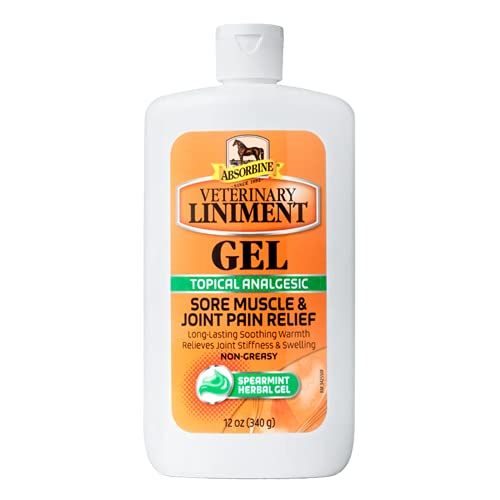
Absorbine Absorbine Veterinary Liniment Gel
The classic menthol gel for soothing sore muscles and arthritis stiffness, easy to spot-apply

Vita Flex Vita Flex Thermaflex Liniment Gel
A warming gel popular for loosening tight muscles before work and easing them after
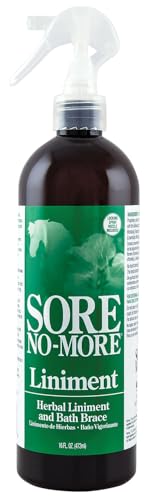
Arenus Sore No More Liniment with Sprayer
A herbal, natural-ingredient liniment in a convenient spray bottle for legs and body
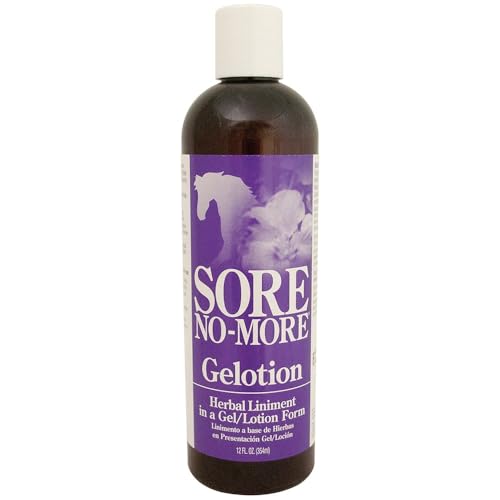
The gel version of the Sore No More herbal formula, ideal for targeted joint and muscle rubs

Absorbine Veterinary Liniment Gel, Small Tube
A small travel-size tube of the classic gel for tack trunks, trailers, and show bags

Absorbine Absorbine Veterinary Liniment Gel 2-Pack
A value two-pack of the classic menthol gel for a busy barn that goes through it
Quick Comparison
| Liniment | Type | Form | Best For |
|---|---|---|---|
| Absorbine Veterinary Liniment Gel | Menthol/cooling | Gel | An all-around classic |
| Vita Flex Thermaflex | Warming | Gel | Loosening up before work |
| Sore No More Liniment | Herbal/natural | Spray | Easy body and leg application |
| Sore No More Gelotion | Herbal/natural | Gel | Targeted joint and muscle rubs |
| Absorbine Gel 3 oz | Menthol/cooling | Gel | Travel and show bags |
| Absorbine Gel 2-Pack | Menthol/cooling | Gel | Value for a busy barn |
How We Chose
These picks are based on research into ingredients and intended use, brand reputation, label safety guidance, and patterns across verified owner reviews. We did not test these products on horses or run a barn trial. We favored long-established formulas with clear directions, a mix of warming, cooling, and herbal options to suit different needs, and a range of sizes and price points so there is a sensible choice whether you want a small show-bag tube or a value pack for daily use.
Warming vs Cooling vs Herbal
Liniments fall into a few broad styles. Warming liniments, such as Thermaflex, produce gentle heat and are popular before work or in cold weather to loosen tight muscles. Cooling, menthol-forward liniments like the classic Absorbine gel give a refreshing sensation that many owners use after work to relax tired legs. Herbal or natural-ingredient liniments, such as the Sore No More line, aim for a gentler approach and are favored by owners who prefer plant-based formulas. Many liniments can serve double duty depending on how you apply them.
How to Use a Liniment Safely
- Read the label first: Some liniments are used full strength, others diluted as a brace or wash. Follow the dilution and use directions exactly.
- Patch test: The first time you use a new product, apply a small amount and watch for any skin reaction before doing a full rub-down.
- Apply to intact skin only: Keep liniment away from cuts, open wounds, irritated skin, eyes, and other sensitive areas.
- Be careful under wraps: Only use a liniment under standing wraps if the label specifically allows it, since wrapping can intensify a warming product enough to blister the skin.
- Massage it in: Work a thin layer into the muscles or around the joint with your hands, then wash up afterward.
Where Liniment Fits in Senior Horse Care
For an arthritic or hard-working senior, a liniment is a lovely comfort ritual: a warming rub on a cold morning before turnout, or a soothing one after a ride. Just keep its role in perspective. It works on the surface, easing muscle tension and stiffness, but it cannot reach the inflammation inside a joint the way an oral joint supplement, weight management, good farrier work, and veterinary pain relief can. Use liniment as one pleasant, affordable layer within that broader plan.
This article is educational and does not replace advice from your equine veterinarian. If your horse is lame, see your vet rather than masking the problem with topicals.
Related Guides
- Best Poultice for Horses - Drawing heat and easing legs.
- Arthritis in Senior Horses - The full management picture.
- Best Joint Supplements for Senior Horses - Internal joint support.
Frequently Asked Questions
What does a liniment actually do for a horse?
A liniment is a topical rub that creates a warming or cooling sensation on the skin, which helps soothe sore, tired muscles and stiff joints and can stimulate circulation to the area. It is a comfort and recovery aid, useful before work to loosen up or after work to relax tired legs and muscles. Liniments do not treat the underlying cause of lameness, so they complement rather than replace veterinary care.
What is the difference between a warming and a cooling liniment?
Warming liniments, often using ingredients that produce gentle heat, are popular before work or in cold weather to loosen tight muscles. Cooling or menthol-forward liniments give a refreshing sensation that many owners like after work to relax tired legs. Some products can be used either way depending on how you apply them and whether you wrap. Choose based on whether you want to warm up or cool down.
Can I use liniment under standing wraps?
Some liniments are labeled safe to use under wraps and some are not, because wrapping can intensify a warming product enough to blister or scald the skin. Always read the label, do a small patch test first, and follow the directions exactly. When in doubt, apply the liniment without wrapping, or ask your vet. Never bandage tightly over a strong warming brace unless the product specifically allows it.
Is liniment safe on broken skin or open wounds?
No. Keep liniment away from cuts, scrapes, open wounds, and irritated skin, as well as the eyes and other sensitive areas, because it can sting badly and delay healing. Apply only to intact skin over the muscles or around joints. If your horse has a skin reaction such as heat, swelling, or hives after application, wash the area and stop using the product.
Will a liniment help my arthritic horse?
It can offer comfort. Many owners rub liniment around stiff joints and tired muscles to soothe an arthritic horse after work or on cold mornings, and horses often seem to appreciate it. That said, liniment is a surface-level comfort tool. It will not control the inflammation inside an arthritic joint the way an oral joint supplement or veterinary pain relief can, so use it as one part of a broader plan.
How do I apply liniment correctly?
Start with clean, dry skin and read the dilution instructions, since some liniments are used full strength and others are diluted in water as a brace or wash. Apply a thin layer and massage it into the muscles or around the joint with your hands, avoiding eyes, wounds, and sensitive areas. Wash your hands afterward, and do a small patch test the first time you use a new product.
Need more help with your senior horse?
Browse our guides by topic to find practical solutions.
Senior Horse Care Kit: $24