Low-NSC Horse Feeds: Brand NSC Chart
A reference chart of common commercial horse feeds and forages with typical NSC percentages and whether they suit PPID, EMS, and laminitis-prone horses.
Quick answer: For horses with PPID, EMS, or insulin dysregulation, choose feeds and forages with a total diet NSC (sugar plus starch) below about 10 to 12 percent, and under 10 percent for the most sensitive or laminitic horses. Ration balancers, plain beet pulp, mature grass hay, and purpose-built low-starch senior feeds usually fit. Sweet feeds, plain grains, and many standard senior feeds run too high. The brand values below are typical published ranges only: NSC varies by batch and crop year, so confirm the current tested value with the manufacturer and test your hay.
Typical NSC by Feed Category and Brand
The chart groups common commercial feeds and forages by where their NSC usually falls. These are orientation figures drawn from manufacturer-published ranges and forage norms, not guarantees for any specific bag. Use them to shortlist products, then verify the exact tested NSC with the company before feeding a metabolic horse.
| Feed or Forage | Typical NSC Range (approx.) | Suitable for PPID / EMS / Laminitis? |
|---|---|---|
| Ration balancer (e.g. Purina Enrich Plus) | ~10 to 14% (fed at very low volume) | Usually yes; tiny portion keeps total sugar load low |
| Low-starch senior feed (e.g. Blue Seal Sentinel Senior SR) | ~11 to 14% | Often suitable; verify current tested value |
| Beet-pulp / high-fiber senior feed (e.g. Triple Crown Senior) | ~11 to 15% | Often suitable; check the specific product tag |
| Plain, unmolassed beet pulp | ~ under 12% | Generally yes; avoid molassed versions |
| Mature grass hay (timothy, orchard, brome) | ~8 to 18% (test to confirm) | Usually the diet base; test and soak if high |
| Alfalfa hay | ~10 to 14% | Often moderate NSC but high calories; feed with care |
| Standard / unlabeled senior feed | Varies widely, ~12 to 20%+ | Not automatically safe; confirm the value |
| Oats and plain grains | ~40 to 55%+ | No; far above target |
| Corn | ~65 to 75%+ | No; very high starch |
| Sweet feed (molasses-coated) | ~25 to 40%+ | No; high sugar and starch |
Notice that the safe options cluster around or below the 10 to 12 percent target, while sweet feeds and grains sit far above it. A metabolic horse is fed forage-first, with a ration balancer or low-NSC senior feed only to fill nutritional gaps.
Lower-NSC Feed Options to Discuss With Your Vet

Kent / Blue Seal Sentinel Senior SR Low Sugar Low Starch Feed
A controlled-starch senior feed for easy chewing and digestion in older horses.

Triple Crown Balancer (Ration Balancer)
A low-intake ration balancer for filling nutrient gaps without high sugar or starch.
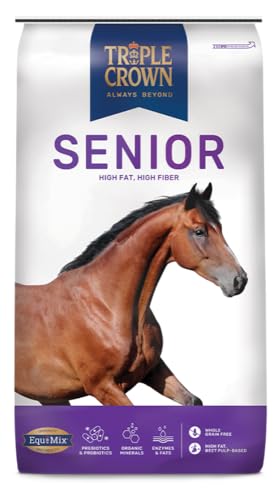
Triple Crown Triple Crown Senior Feed (High Fat, High Fiber)
A beet-pulp-based senior feed emphasizing fat and fiber over starchy grains.
If you are shopping rather than checking a tag, the best low-sugar horse feeds puts the main low-NSC bagged feeds side by side with prices, and the best ration balancers for senior horses covers the lowest-sugar way to balance a forage diet.
Why Brand Numbers Vary by Batch
Commercial feeds are made from agricultural ingredients whose sugar and starch content shifts with crop year, weather, and supplier. A manufacturer formulates toward a target NSC, but the actual figure for any given bag can drift above or below the published range. This is why a single number on a website or chart should be treated as a guide, not a guarantee. For a sensitive horse, ask the company for the current tested NSC and, just as importantly, test your hay, since forage is the largest part of the diet.
How to Read a Feed Tag for NSC
Many feed tags do not print NSC directly. When they list sugar (or water-soluble carbohydrate or ESC) and starch separately, you can add those two figures for an approximate NSC. If neither is listed, contact the manufacturer's nutrition line, which can usually give you a tested range for the product. Look past marketing words like senior or complete and focus on the actual sugar and starch numbers, because those drive laminitis risk in metabolic horses.
Building the Whole Diet
The goal is a total diet NSC under about 10 to 12 percent, built on tested low-sugar forage, with a ration balancer or low-NSC senior feed to cover protein, vitamins, and minerals. Soaking hay can shave some sugar from a borderline batch, and careful pasture management limits the biggest hidden sugar source. Pair this feeding plan with PPID medication where prescribed and steady weight control. Your veterinarian or an equine nutritionist can confirm the right target and product mix for your individual horse.
Related Reading
- NSC Values in Horse Feeds - The concept of NSC and the low-sugar target explained.
- Hay Types Compared for Senior Horses - Timothy, orchard, alfalfa, and more on NSC and protein.
- PPID ACTH Testing Chart - Diagnosing the condition that demands low-NSC feeding.
- Horse Feeding Chart by Weight - How much forage to feed each day.
This chart is educational and does not replace your veterinarian or equine nutritionist. NSC values are approximate and vary by batch; confirm tested values with manufacturers and test your forage.
Frequently Asked Questions
Which horse feeds are considered low-NSC?
Feeds marketed as low sugar and low starch, ration balancers, and many beet-pulp or soy-hull-based senior feeds tend to fall at or below the 10 to 12 percent NSC target. Examples often cited in this range include purpose-built low-starch performance feeds, ration balancers like Purina Enrich Plus, and several senior feeds formulated for metabolic horses. Always confirm the current guaranteed analysis or tested NSC with the manufacturer, since formulas and batches change over time.
What NSC percentage should I look for on a feed tag?
For horses with PPID, EMS, or insulin dysregulation, aim for individual feeds and a whole diet under about 10 to 12 percent NSC, and under 10 percent for the most sensitive or actively laminitic horses. NSC is sugar (water-soluble carbohydrate or ESC) plus starch. Many feed tags do not print NSC directly, so you may need to add the listed sugar and starch values or contact the company for a tested figure.
Are all senior horse feeds low in sugar?
No. Senior feeds are built to be easy to chew and digest, but their NSC varies widely. Some senior feeds run 18 to 20 percent or higher, which is unsafe for a metabolic horse, while others are specifically formulated low-NSC. Never assume a bag labeled senior is automatically safe for a PPID or EMS horse. Check the guaranteed analysis or ask the manufacturer for the tested NSC before feeding.
Why do NSC values vary so much between batches?
Commercial feeds are made from agricultural ingredients whose sugar and starch content shifts with growing conditions, crop year, and supplier. Manufacturers formulate to a target, but the actual NSC of any given bag can drift above or below the label range. For a sensitive horse, this is why testing your forage and asking the company for current tested values matters more than relying on a single published number.
Is beet pulp safe for metabolic horses?
Plain, unmolassed beet pulp is generally low in NSC and is a popular fiber and calorie source for metabolic and senior horses, especially those who struggle to chew long-stem hay. Rinsing or soaking it removes surface molasses if present. Avoid molassed beet pulp products, which add sugar. As always, introduce changes gradually and confirm the overall diet stays under your horse's NSC target with your vet or nutritionist.
How do I confirm a brand's exact NSC value?
Contact the manufacturer directly, since many feed tags list only sugar and starch, or nothing at all. Most companies have a nutrition help line or website data sheet with tested NSC ranges for each product. For a metabolic horse, this five-minute call is worth it. Combine the feed value with a forage analysis of your hay to know the NSC of the entire diet, which is what actually drives laminitis risk.
Can I feed a small amount of a higher-NSC feed safely?
Sometimes, but cautiously. The total daily sugar and starch load matters, so a small ration of a moderate feed split into meals may be tolerated by a mildly affected horse, while an actively laminitic or severely insulin-dysregulated horse needs the strictest control. Portion size, meal frequency, and the rest of the diet all factor in. Let your vet set the threshold for your individual horse rather than guessing from the bag alone.
Need more help with your senior horse?
Browse our guides by topic to find practical solutions.
Senior Horse Care Kit: $24