Vitamin & Mineral Needs of Senior Horses
Which vitamins and minerals older horses commonly lack, why vitamin E matters off grass, ration balancers vs supplements, and how to balance a forage diet safely.
Calories get most of the attention when people talk about feeding older horses, but the quiet half of nutrition is vitamins and minerals. A senior can be holding good weight on hay or a forage replacement and still be short on the micronutrients that keep muscle, nerve, hoof, and coat healthy. Forage-only diets in particular tend to leave gaps, and an older horse on restricted grain misses the fortification that bagged feeds provide. This guide covers what those gaps usually are and how to fill them safely.
The watchword here is balance, not more. Piling on supplements can do as much harm as good, especially with minerals like selenium that are toxic in excess. The goal is a complete, balanced diet, which usually means a ration balancer or a targeted vitamin and mineral product rather than a shelf full of buckets.
Balancing the Diet

Formula 707 Daily Essentials Ration Balancer
Concentrated complete vitamin and mineral pellet for forage diets

Farnam Multi-Vitamin & Mineral Supplement
Balanced daily vitamins and minerals for overall health

Kentucky Performance Natural Vitamin E Supplement
Key antioxidant for horses off fresh green grass
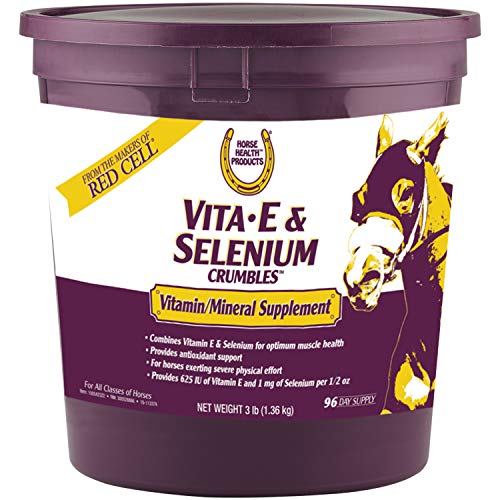
Horse Health Vitamin E & Selenium Crumbles
Antioxidant and muscle support where selenium is low
Why Forage Alone Falls Short
Good hay or pasture supplies most of what a horse needs, but rarely all of it. Hay loses certain vitamins as it dries and stores, and the mineral content of any forage reflects the soil it grew in, which is often imbalanced. The result is that a horse on a forage-only diet, which is exactly what we recommend for many easy keepers and metabolic seniors, can be short on key micronutrients even while it holds weight beautifully. Balancing the diet means topping up those specific gaps without adding the calories or sugar a full grain ration would bring.
The Common Shortfalls
Exact gaps depend on your hay and region, but a few shortfalls turn up again and again in forage-fed horses:
- Vitamin E: Abundant in fresh green grass, but it fades as hay dries and stores. A horse off pasture can run low within months.
- Copper and zinc: Frequently low or imbalanced in hay, affecting coat, hoof, and immune function.
- Selenium: Deficient in many regions and excessive in others, so it must be matched to your area, never blindly stacked.
- Quality protein and lysine: Often short on grass hay, which shows up as lost topline and poor muscle in older horses.
Because forage varies so much, the only way to know your hay's profile for sure is to test it. Short of that, a balanced ration balancer or vitamin and mineral product is designed to cover the usual gaps.
Vitamin E Deserves Special Attention
Of all the micronutrients, vitamin E is the one most worth flagging for senior horses. It is a major antioxidant that supports muscle and nerve health, and horses get the vast majority of it from fresh green grass. A senior living on hay, in a dry lot, or on restricted pasture can slide into deficiency in a matter of months. For older horses showing muscle loss or neurological signs, supplementing natural vitamin E is a common veterinary recommendation. If your horse is off grass for much of the year, this is a conversation worth having with your vet.
Ration Balancer or Standalone Supplement?
There are two main ways to balance a forage diet, and the right one depends on what your horse's base diet is missing.
- Ration balancer: A concentrated pellet supplying vitamins, minerals, and quality protein together, fed in a small daily amount. Ideal for easy keepers on a forage-only diet that need a full balance without calories. See our roundup of the best ration balancers.
- Standalone vitamin and mineral supplement: Tops up specific nutrients when you do not need the protein of a balancer, or when a horse is already on a partly fortified feed.
Both fill the gaps a forage diet leaves without the sugar and starch of a grain ration, which matters especially for metabolic horses.
The Danger of Over-Supplementing
More is not better with minerals. The classic hazard is selenium, where the margin between a helpful dose and a toxic one is narrow, and stacking several products that each contain it can tip a horse into toxicity. Minerals also work in balance with one another, particularly calcium and phosphorus, so a haphazard pile of supplements can throw the whole ratio off. The safe approach is to add up everything your feeds and supplements provide, avoid duplicating the same nutrients across products, and bring your vet or an equine nutritionist into any complex plan.
When a Complete Feed Covers It
If your horse eats a complete or senior feed at the full rate printed on the bag, it is likely already getting a balanced vitamin and mineral profile, and adding a balancer on top risks over-supplementation. The common trap is feeding less than the bag rate, which leaves the horse short on fortification even though the label promises completeness. Read the tag, note the feeding rate, and if you feed below it, a ration balancer can fill the gap. Our guide to the best senior horse feed covers fully fortified options.
The Bottom Line
A senior horse can carry good weight and still be short on the vitamins and minerals that keep muscle, nerve, hoof, and coat healthy, because forage-only diets leave predictable gaps. Watch especially for vitamin E once a horse is off grass, plus copper, zinc, selenium, and quality protein. Fill the gaps with a ration balancer or a targeted supplement rather than a pile of products, respect the real danger of over-supplementing selenium, and remember a fully fed complete feed may already do the job. Test your hay and partner with your vet to get the balance right.
Balancing Quick Links
- Daily Essentials Ration Balancer - vitamins, minerals, and protein in one pellet
- Vitamin E & Selenium Crumbles - antioxidant support off grass
- Triple Crown Balancer - low-intake vitamin and mineral pellet
Related Guides
- Best Ration Balancers - Low-calorie ways to balance a forage diet.
- Best Senior Horse Feed - Fully fortified complete feeds.
- How to Feed a Senior Horse - The full feeding framework.
Frequently Asked Questions
Do senior horses need extra vitamins and minerals?
Most do need supplementation, but not because age itself raises requirements dramatically. The issue is that a forage-only diet, common for easy keepers and metabolic horses, is short on certain minerals, vitamin E, and sometimes quality protein. Older horses on restricted grain may miss the fortification that bagged feeds provide. The cleanest fix is usually a ration balancer or a vitamin and mineral supplement that fills the gaps without adding calories.
What vitamins and minerals do older horses commonly lack?
On a hay-based diet the usual shortfalls are vitamin E, which drops sharply once a horse is off fresh green grass, plus copper, zinc, and selenium, which are low or imbalanced in much hay. Quality protein and the amino acid lysine can also run short, affecting topline. Exact needs depend on your hay and region, so testing hay or talking to your vet beats guessing, especially with selenium, which is toxic in excess.
Why is vitamin E important for senior horses?
Vitamin E is a key antioxidant that supports muscle and nerve health, and horses get most of it from fresh green grass. A senior on hay, a dry lot, or restricted pasture can become deficient within months, since hay loses vitamin E as it dries and stores. Supplementing natural vitamin E is commonly recommended for horses off grass, and it is especially worth discussing for older horses with muscle loss or neurological concerns.
Should I use a ration balancer or a vitamin supplement?
A ration balancer is the better choice when you want vitamins, minerals, and quality protein together in one pellet, which suits easy keepers on a forage-only diet. A standalone vitamin and mineral supplement makes sense when you only need to top up specific nutrients, or when a horse is already on a fortified feed. Both balance a forage diet without piling on calories. Match the tool to what your horse's base diet is missing.
Can a horse get too much of a mineral?
Yes, and selenium is the classic danger, since the gap between a beneficial dose and a toxic one is narrow. Stacking multiple supplements that each contain selenium, or over-supplementing in a region with selenium-rich soil, can cause toxicity. Other minerals also need to stay in balance with one another, particularly calcium and phosphorus. This is why you should not layer many products blindly. Add up what your feeds and supplements provide, and involve your vet.
Does a horse on a complete senior feed still need a supplement?
Usually not, as long as you feed it at the full rate on the bag. Complete and senior feeds are fortified to supply a balanced vitamin and mineral profile when fed in the recommended amount, which is often fairly large. The catch is that many owners feed less than the rate, which leaves the horse short. If you feed below the bag rate, a ration balancer can fill the gap. Read the tag and do the math.
How do I know if my senior horse's diet is balanced?
The most reliable approach is to test your hay, total up what your feeds and supplements provide, and compare against requirements with help from your vet or an equine nutritionist. Visual clues like a dull coat, poor hoof quality, or lost topline can hint at gaps but are not specific. Because hay varies so much by region and cutting, a diet that is balanced in one barn may be short in another, so testing beats assuming.
Need more help with your senior horse?
Browse our guides by topic to find practical solutions.
Senior Horse Care Kit: $24