How to Feed a Senior Horse: A Practical Guide
How to feed a senior horse the right way: forage-first feeding, when to switch to senior feed, soaking for poor teeth, and adding safe calories for older horses.
Feeding a senior horse well is less about buying a bag labeled "senior" and more about matching the diet to what your individual horse can chew, digest, and metabolize. An older horse with sound teeth and a healthy weight may need almost no change, while a horse the same age with worn molars or Cushing's needs a very different plan. The goal is steady body condition, a healthy gut, and a diet built around forage first.
This guide walks through the order that actually matters: forage, then balancing the diet, then adding calories or switching to a complete feed only if your horse needs it. For a personalized starting amount based on your horse's weight, use our feed weight calculator, then fine-tune with the principles below.
Senior Feeding Starter Kit
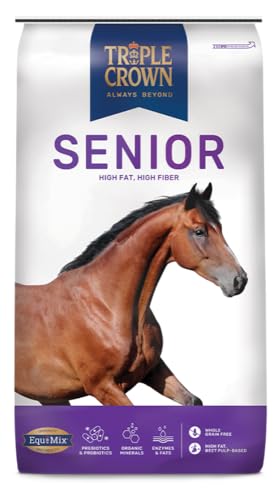
Triple Crown Senior Horse Feed, High Fat & High Fiber
Soakable complete senior feed for horses that struggle with hay

Standlee Teff Grass Hay Pellets
Soak into a mash to replace or extend hay for poor teeth
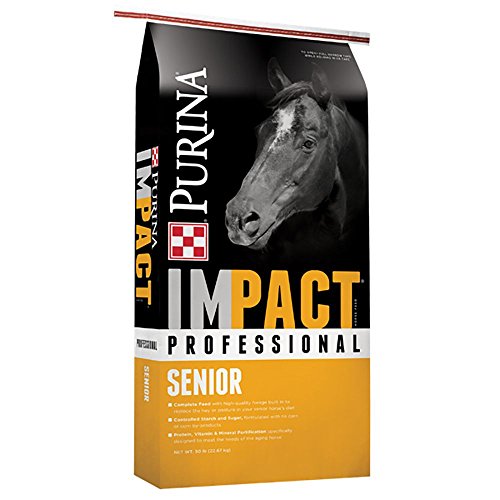
Purina Impact Professional Senior Feed
Senior feed that can be soaked into a mash or fed dry

Triple Crown Horse Vitamin & Mineral Balancer
Low-calorie way to balance a forage diet for easy keepers
Start With Forage, Always
A horse is a hindgut fermenter built to eat fiber more or less continuously. That does not change with age. Forage, whether pasture, long-stem hay, or a forage replacement, should still make up the foundation of a senior horse's diet, usually 1.5 to 2 percent of body weight per day. For a 1,000-pound horse that is roughly 15 to 20 pounds of dry forage daily. Keeping fiber moving through the gut supports digestion, reduces the risk of ulcers and colic, and gives an older horse the chewing and foraging behavior it needs.
The senior twist is that many older horses lose the ability to chew long-stem hay efficiently. Worn, loose, or missing molars lead to quidding, where the horse balls up hay and drops it half-chewed. A quidding horse is not getting its forage value and is at real risk of choke and impaction colic. That is the point where forage has to change form rather than disappear.
When to Switch to a Forage Replacement
If your horse is quidding, has lost teeth, or simply cannot hold weight on hay anymore, you replace some or all of the long-stem forage with chewable, often soakable, fiber. Good options include hay pellets, hay cubes, chopped forage, and beet pulp, all of which can be soaked into a soft mash. These deliver the same fiber and much of the same nutrition in a form a near-toothless horse can actually swallow and use.
- Hay pellets and cubes: Timothy, alfalfa, or a blend, soaked 15 to 30 minutes into a mash. A clean way to fully replace hay.
- Beet pulp: A highly digestible, low-sugar fiber and calorie source that soaks into a soft, palatable mash.
- Chopped forage: Short-cut hay that some seniors with partial dentition can still manage.
- Complete senior feeds: Formulated to be fed in large amounts so they can replace forage entirely when a horse can no longer chew anything coarse.
We cover these in depth in our guide to the best hay alternatives for senior horses and our piece on feeding a horse with no teeth.
Balance the Diet
Forage alone, even good forage, is usually short on certain minerals, vitamin E, and quality protein for topline and muscle. For an easy keeper that holds weight well, the cleanest fix is a ration balancer: a concentrated pellet that supplies vitamins, minerals, and amino acids in a small daily serving without piling on calories or sugar. This lets a chubby senior keep a balanced diet on a near-forage-only ration. See our roundup of the best ration balancers.
For horses that need both balance and calories, a fortified senior feed fed at the recommended rate covers the vitamins and minerals on its own, so you do not stack a balancer on top. Read the bag rate carefully, because most senior feeds only deliver full fortification when fed in fairly large daily amounts.
Add Calories Safely for Hard Keepers
Many older horses are hard keepers, losing muscle and condition even on plenty of feed. The safest way to add energy is fat and highly digestible fiber rather than starch and sugar. Beet pulp, a senior feed, and added oil or a rice bran product raise calories without the metabolic risk of heavy grain. Feed several smaller meals rather than one large bucket, since a senior's digestion handles frequent small portions better. Our guide to the best weight gain supplements for horses walks through the options.
Important caveat: persistent weight loss in an older horse is usually a symptom, not just a calorie shortfall. Dental disease, parasites, and PPID (Cushing's) are common culprits. Get a veterinary workup before assuming you simply need to feed more.
Mind Sugar and Starch for Metabolic Horses
Senior horses have a high rate of PPID and insulin dysregulation, and both raise the danger of laminitis from sugar and starch. If your horse has been diagnosed with Cushing's or EMS, choose feeds labeled low NSC (non-structural carbohydrates), avoid sweet feeds and lush spring grass, and consider soaking hay to lower its sugar. Our guide to feeding a Cushing's horse covers this in detail. When in doubt, ask your vet to test insulin and ACTH.
Soaking, Choke, and Meal Mechanics
Soaking is one of the simplest senior feeding upgrades. Turning pellets, cubes, beet pulp, or a complete feed into a warm mash makes meals easier to chew, adds water to support hydration and gut motility, and dramatically lowers choke risk. Choke, an esophageal obstruction, is far more common in horses with poor teeth that bolt dry feed. Soak thoroughly, especially in cold weather when horses drink less, and never feed dry pellets to a horse that has choked before.
Senior Feeding Quick Links
- Triple Crown Senior Feed - soakable complete feed for horses off hay
- Standlee Teff Grass Hay Pellets - mash-friendly forage replacement
- Purina Active Senior Horse Feed - pelleted senior feed
Track Weight and Adjust
The bag rate and any calculator are starting points. Your horse's body tells you whether you are right. Learn the Henneke body condition score and aim to keep most seniors around a 5 to 6 out of 9, with a touch more cover going into winter. Run a weight tape around the girth every couple of weeks and write the number down, because slow change is hard to see by eye. If condition is sliding in either direction, adjust the ration and loop in your veterinarian.
The Bottom Line
Feed your senior horse forage first, change forage to a soakable form when teeth fail, balance the diet with a ration balancer or a properly fed senior feed, and add safe fat-based calories if your horse is a hard keeper. Keep sugar and starch low for metabolic horses, soak meals to ease chewing and prevent choke, and let body condition guide every adjustment. Start with our feed weight calculator, then watch your horse, not just the bag.
Related Guides
- How Much to Feed a Senior Horse - Forage amounts and meal frequency for older horses.
- Best Senior Horse Feed - Complete feeds compared for older horses.
- Feeding a Horse With No Teeth - Mashes and soaked forage for toothless seniors.
Frequently Asked Questions
At what age does a horse become a senior?
Most horses are called senior around 15 to 20 years, but age is only a number. A 17-year-old with good teeth and steady weight may thrive on a normal diet, while a 14-year-old with worn molars or PPID needs senior management now. The real triggers for a feeding change are quidding, dropping weight, dental disease, or a diagnosis like Cushing's, not the birthday alone.
Do senior horses need a special senior feed?
Not always. A horse with good teeth that still chews hay well can stay on quality forage plus a ration balancer. Complete senior feeds earn their place when a horse can no longer chew long-stem hay efficiently, since they are built to be fed in large amounts and can fully replace forage when soaked into a mash. Let your horse's teeth and body condition decide, ideally with your vet.
Should I soak my senior horse's feed?
Soak it if your horse has poor teeth, has choked before, or eats too fast. Hay pellets, cubes, beet pulp, and complete senior feeds all turn into a soft mash when soaked in warm water for 15 to 30 minutes. A mash is easier to chew and swallow, adds water to the diet, and greatly lowers choke risk. Horses with healthy teeth can be fed dry, but many seniors do better on soaked meals.
How do I feed a senior horse that is losing weight?
First rule out dental disease, parasites, and PPID with your vet, since weight loss is usually a symptom, not just a calorie gap. Then build the diet forage-first, add a senior feed or beet pulp for extra safe calories, and use a fat source such as oil or a rice bran product to add energy without excess sugar. Feed several smaller meals and reweigh with a weight tape every couple of weeks.
Can I still feed hay to an old horse with bad teeth?
Maybe not as long-stem hay. If your horse drops wads of half-chewed hay, called quidding, it is not getting the nutrition from it and is at risk of choke and impaction colic. Soaked hay pellets, hay cubes, chopped forage, and complete senior feeds give the same fiber in a form a toothless or near-toothless horse can actually use. Your vet or an equine dentist can confirm how much chewing ability remains.
How much should a senior horse eat each day?
Aim for 1.5 to 2 percent of body weight in forage or forage replacement daily, which is roughly 15 to 20 pounds of dry feed for a 1,000-pound horse. Spread it across two or more meals or free-choice forage so the gut is never empty for long. Use our feed weight calculator to get a starting target, then adjust based on body condition and your vet's guidance.
Need more help with your senior horse?
Browse our guides by topic to find practical solutions.
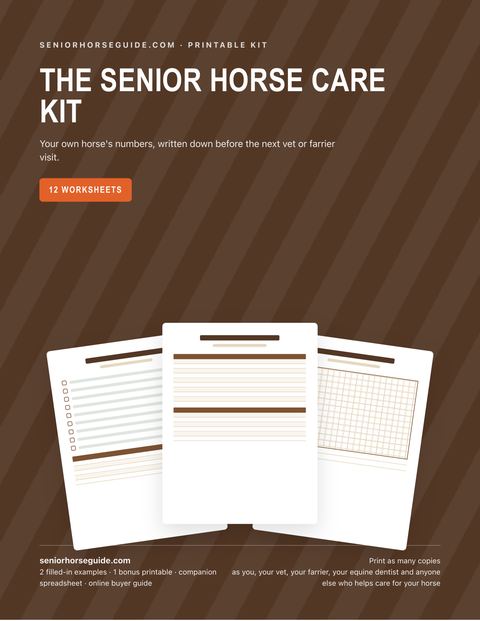
Senior Horse Care Kit: $24