Senior Horse Feed Comparison: 6 Top Feeds
Short answer · Updated 2026
For most older horses the best senior feed is Triple Crown Senior: beet pulp based, high in fat and fiber, lower in starch, and soakable into a mash for worn teeth. For a hard keeper that needs weight, Triple Crown Senior Gold adds more fat and whey protein. For a senior still in work, Purina Active Senior, and for a metabolic senior, a lower-NSC feed such as Tribute Maturity.
Senior horse feeds compared
| Feed | Form | What sets it apart | Best for |
|---|---|---|---|
| Triple Crown Senior | Pellet, soakable | Beet pulp base, high fat and fiber, reduced starch and sugar | Most seniors, including poor teeth |
| Triple Crown Senior Gold | Textured | Extra fat from soy oil, rice bran and flax, plus whey protein | Hard keepers that need weight |
| Purina Active Senior | Pellet | Senior formula for horses still working | Older horses in light work |
| Blue Seal Sentinel Senior SR | Extruded | Probiotics and prebiotics, easy to chew | Poor teeth, prematurely aging horses |
| Tribute Maturity | Textured | No-corn formula for lower NSC, usable as a complete feed | Seniors that need lower sugar and starch |
| New Country Organics Loyalty | Pellet, organic | Corn-free organic senior pellet for horses 15+ | Owners who want organic |
Features from each manufacturer's product description. Compare the guaranteed analysis on the tag (crude fat, fiber and, where published, NSC) before switching.
A complete senior feed is one of the most useful tools for keeping an older horse in good condition, especially once worn teeth make long-stem hay a struggle. The best senior feeds are high in digestible fiber, carry moderate fat for safe calories, and are built to be soaked into a soft mash that a near-toothless horse can actually eat. Many are formulated to replace forage entirely when fed at full rate.
Below are our research-based picks, chosen from feed tags, brand reputation, and verified owner reviews rather than any barn trial. If your horse still chews hay well and holds weight, it may not need a complete feed at all. If yours is losing condition, quidding, or metabolic, one of these can anchor the diet. Always confirm big diet changes with your veterinarian.
Best Senior Horse Feeds

Triple Crown Senior Gold Premium Textured Feed
Highly fortified textured senior feed for weight gain and topline
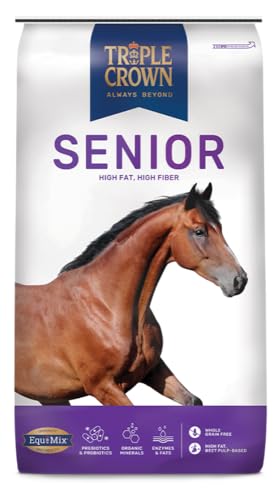
Triple Crown Senior Feed, High Fat & High Fiber
Soakable complete feed that can fully replace hay for poor teeth

Purina Active Senior Horse Feed, Pelleted
Pelleted senior feed for older horses still in light work

Blue Seal Sentinel Senior SR Feed
Built for prematurely aging horses or those with poor teeth
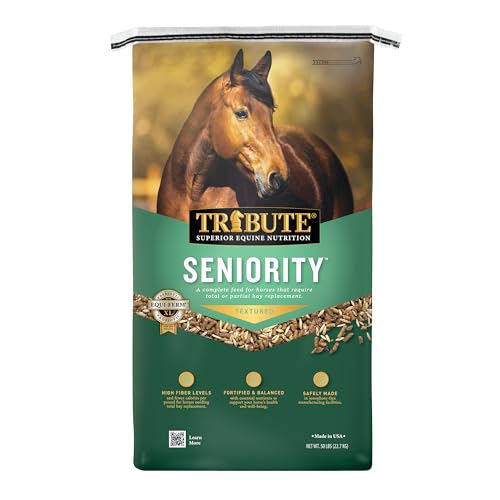
Tribute Maturity Textured Senior Feed
Textured senior formula focused on digestibility and topline

New Country Organics Loyalty Organic Senior Pellets 15+
Corn-free, soy-free organic senior pellets for horses 15 and up
How We Chose These Feeds
We did not run a feeding trial or claim hands-on testing. Instead, we evaluated each feed the way a careful owner would: by reading the feed tag for crude fiber, fat, and protein, checking whether the product is labeled as a complete feed that can replace forage, noting starch and sugar where listed, and weighing brand track record against patterns in verified owner reviews. We gave extra credit to feeds that soak well into a mash, suit horses with poor dentition, and offer a sensible balance of safe calories.
Comparison at a Glance
| Feed | Form | Best For | Budget |
|---|---|---|---|
| Triple Crown Senior Gold | Textured | Hard keepers needing weight and topline | Under $100 |
| Triple Crown Senior High Fat | Pelleted, soakable | Replacing hay for poor teeth | Under $100 |
| Purina Active Senior | Pelleted | Older horses still in light work | Under $100 |
| Blue Seal Sentinel Senior | Extruded | Poor teeth and prematurely aging horses | Under $100 |
| Tribute Maturity | Textured | Digestibility and topline support | Under $100 |
| New Country Organics Loyalty Senior | Pelleted, organic | Owners wanting corn-free, soy-free feed | Under $100 |
What a Good Senior Feed Actually Does
A senior feed is not just adult feed with a different label. The best ones are designed around the realities of an aging digestive tract and worn teeth. They carry high digestible fiber, often from beet pulp and forage, so they deliver calories the gut can use even when chewing is poor. They use fat rather than heavy starch for energy, which is safer for metabolic horses and easier on the hindgut. And they are fortified to be fed in large amounts, so they can stand in for forage rather than just topping it off.
When a Complete Feed Replaces Forage
The defining feature of a true complete senior feed is that it can replace hay entirely when a horse can no longer chew any. For a horse with severe dental disease, you feed the senior product at the high end of its rate, usually 1.5 to 2 percent of body weight, divided into several soaked meals through the day. This keeps fiber moving through the gut and prevents the empty-stomach gaps that lead to ulcers and colic. Follow the bag's complete-feed instructions closely, because under-feeding a complete feed leaves a horse short on both calories and nutrients.
Soaking Makes Senior Feed Better
Almost every senior feed in this guide soaks into a soft, palatable mash within 15 to 30 minutes in warm water. Soaking is worth the small effort: it makes meals far easier for a worn mouth to chew, adds water to support hydration and gut motility, and sharply reduces the risk of choke in horses that bolt their feed. If your horse has ever choked, soak every meal and never offer dry pellets. In winter, a warm mash also encourages a horse to take in water it might otherwise skip.
Matching the Feed to Your Horse
A hard keeper losing topline benefits from a calorie-dense, higher-fat textured feed. A horse that simply cannot chew hay needs a soakable complete feed it can live on. A metabolic horse with PPID or insulin issues needs a low-NSC product and may be better served by the options in our Cushing's feeding guide. And an easy keeper that still chews hay well may need no complete feed at all, just forage and a ration balancer. Match the feed to the horse in front of you, not to the calendar.
When a Ration Balancer Is Enough
Not every old horse needs a calorie-dense feed. The easy keeper that stays round on hay still needs vitamins, minerals and quality amino acids for topline and immune health, and a ration balancer such as Triple Crown Balancer delivers that in a serving of about 1 to 2 pounds a day, without the starch and calories of a full feed. Pouring pounds of senior feed into a horse that is already round can worsen weight and metabolic problems, so match the product to the body, not the age. Our ration balancer guide compares the options.
Building a Feeding Plan for Your Senior Horse
The bag is only one part of feeding an older horse well. The most reliable results come from a plan your vet helps shape.
- Start with the teeth. An annual or twice-yearly dental exam tells you whether your horse can still chew hay. Quidding and dropping feed are signs you may need a complete or soaked feed.
- Score body condition monthly. Use the Henneke 1 to 9 scale and aim for a 4 to 6. Trends matter more than a single number, so track it through the seasons.
- Protect the metabolic horse. For PPID or insulin dysregulation, keep non-structural carbohydrates low and confirm hay and feed choices with your vet.
- Change feed gradually. Transition over 7 to 10 days to protect the hindgut and reduce colic risk.
- Always provide forage or a replacer. A horse that cannot chew hay still needs the fiber, which is why complete feeds and soaked mashes matter so much in old age.
Persistent weight loss, sudden appetite changes or signs of laminitis warrant a call to your vet, not just a bigger scoop.
Senior Feed Quick Links
- Triple Crown Senior Gold - calorie-dense textured pick for hard keepers
- Triple Crown Senior High Fat - soakable complete feed for poor teeth
- Purina Active Senior Horse Feed - pelleted senior feed
The Bottom Line
The best senior horse feed is the one that fits your horse's teeth, weight, and metabolism. For a hard keeper, reach for a calorie-dense textured feed; for a toothless horse, choose a soakable complete feed that can replace forage; for a metabolic horse, insist on low NSC. Read the tag, soak the meals, follow the feeding rate, and let body condition guide adjustments. When in doubt, your veterinarian can help you pick and portion the right feed.
Related Guides
- How to Feed a Senior Horse - The full forage-first feeding framework.
- Best Hay Alternatives for Senior Horses - Pellets, cubes, and beet pulp compared.
- Best Weight Gain Supplements for Horses - Adding safe calories for hard keepers.
- Best Cushing's and PPID Supplements - Metabolic support alongside a low-NSC diet.
- Horse Feeding Chart by Weight - Daily forage and feed amounts by body weight.
Sources
- Formulation and intended use: manufacturer product information from Triple Crown, Purina, Blue Seal, Kalmbach (Tribute) and New Country Organics.
- Forage and complete-feed feeding rates for older horses: National Research Council, Nutrient Requirements of Horses (6th edition) and university equine extension guidance.
- NSC targets for metabolic seniors: Equine Endocrinology Group recommendations on insulin dysregulation.
- Body condition scoring: the Henneke 1 to 9 body condition scale.
Frequently Asked Questions
When should I switch my horse to a senior feed?
There is no fixed birthday for it. Switch when your horse shows the signs a senior diet is built for: dropping weight despite good hay, dental wear that makes long-stem forage hard to chew (quidding or dropping balls of hay), or a vet diagnosis such as PPID. Many horses do well on a regular ration into their early 20s, while others need a senior feed by 15. Let body condition, dental exams and your vet guide the timing rather than age alone.
What makes a complete senior feed different from regular grain or a ration balancer?
A complete senior feed carries enough built-in fiber to partly or fully replace hay for a horse that can no longer chew forage, so it is fed in large amounts. Regular grain and ration balancers are meant to sit on top of good hay or pasture; a balancer is fed at only about 1 to 2 pounds a day. Read the feeding directions, because the right amount differs hugely between the two.
Is low-starch feed better for senior horses?
It is essential for seniors with PPID (Cushing's), equine metabolic syndrome, insulin dysregulation or a laminitis history, where keeping non-structural carbohydrates (NSC) low protects the feet. A healthy senior with no metabolic issues does not strictly need a low-starch feed, though many low-NSC senior feeds are good all-round choices. If you are unsure of your horse's metabolic status, ask your vet about insulin and ACTH testing before choosing.
How do I compare senior horse feeds for weight gain?
Read the guaranteed analysis rather than the front of the bag. For weight gain, look for higher crude fat and digestible fiber, such as beet pulp, so the extra calories do not come from starch, and check the recommended feeding rate, because a feed only works if the horse eats the full amount. Triple Crown Senior Gold and Triple Crown Senior are built this way. Weigh or weight-tape the horse every two to four weeks to see if it is working.
What makes a feed a true senior horse feed?
A genuine senior feed is high in digestible fiber, moderate in fat for safe calories, easy to chew, and fortified so it can replace some or all forage when fed at full rate. The best ones are also soakable into a mash for horses with poor teeth and keep starch and sugar reasonable. A feed simply labeled senior is not automatically right, so read the tag for fiber, fat, and NSC.
Does my horse need senior feed just because it is old?
No. A horse with sound teeth that holds weight on forage plus a ration balancer does not need a complete senior feed. Senior feeds shine when a horse can no longer chew hay well, is losing weight, or needs a fully fortified diet in mash form. Many owners switch too early. Let dental health and body condition, ideally checked by your vet, drive the decision rather than age alone.
Can senior feed completely replace hay?
Yes, the complete senior feeds in this guide are formulated to replace forage entirely when fed at the high end of their rate, usually divided into several meals. This matters for horses with severe dental disease that can no longer chew any hay. To fully replace forage you typically feed a large daily amount, often soaked into a mash, so always follow the bag's complete-feed instructions and adjust to keep weight steady.
Should I soak senior feed?
Soak it if your horse has poor teeth, eats fast, or has ever choked. Most senior feeds turn into a soft mash in warm water within 15 to 30 minutes, which is far easier to chew and swallow and adds valuable water to the diet. Horses with good teeth can be fed dry, but soaking is a low-effort upgrade that lowers choke risk and improves hydration, especially in cold weather.
Is senior feed safe for a horse with Cushing's?
Only if the NSC is low enough. Standard senior feeds vary widely in sugar and starch, and some are too high for a PPID or insulin-dysregulated horse. Look for feeds specifically labeled low starch or low NSC, often under about 12 percent combined, and confirm the choice with your vet. For metabolic horses we cover dedicated options in our guide to feeding a Cushing's horse.
How much senior feed should I give per day?
It depends on whether the feed supplements forage or replaces it. As a topper alongside hay, you may feed a few pounds a day per the tag. As a full forage replacement, you feed much more, often 1.5 to 2 percent of body weight, split into several meals. Always start from the bag's directions, then adjust based on body condition and weight tape readings over time.
Need more help with your senior horse?
Browse our guides by topic to find practical solutions.
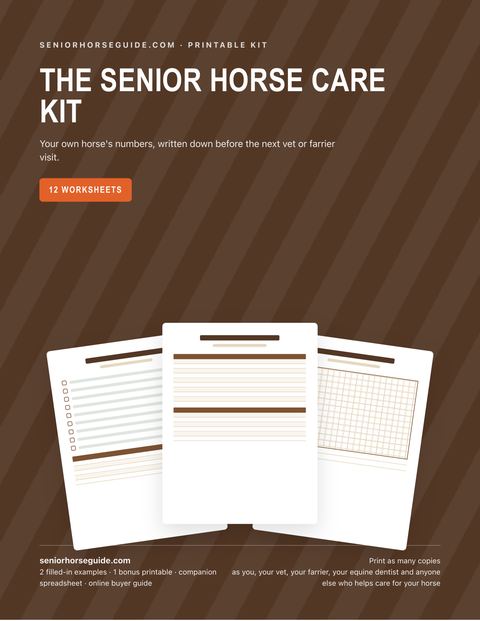
Senior Horse Care Kit: $24