Can Horses Eat Hay Cubes? A Senior Horse Guide
Can horses eat hay cubes? Yes, they are real forage and ideal soaked for senior horses with poor teeth. Why to soak them, how much to feed, and low-sugar options.
Yes, horses can eat hay cubes, and they are a true forage rather than a treat, made of compressed chopped hay that can replace some or all of a horse's long-stem hay. Soaked into a soft mash, they are one of the best forage options for senior horses with worn or missing teeth. The key precaution is to soak them, especially for older horses, to prevent choke and make them easy to chew.
Unlike most foods in this section, hay cubes are not an indulgence to ration. They are a legitimate way to feed forage, and for many seniors they are the difference between a horse that can eat enough and one that cannot. The how, though, matters a great deal.
Soakable Forage for Senior Horses

Standlee Timothy Grass Mini Cubes
Soakable grass forage cubes that replace long-stem hay for poor teeth

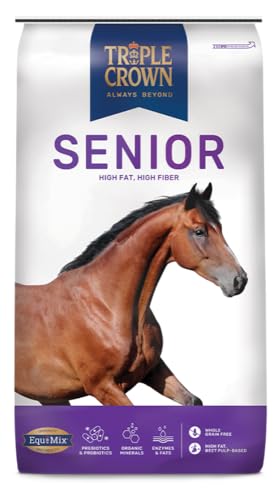
Triple Crown Triple Crown Senior Horse Feed
High-fat, high-fiber soakable complete feed for older horses
What Hay Cubes Are
Hay cubes are simply hay, chopped and compressed into dense cubes. They come in grass types like timothy, in alfalfa, and in blends such as alfalfa-timothy. Because they are real forage, they can supplement or fully replace long-stem hay, which makes them invaluable for horses that can no longer manage a flake of hay. The catch is that in their dry, hard form, they demand thorough chewing.
Why Soaking Matters
Dry cubes are firm, and a horse that bolts them or cannot chew well can choke, as a cube lodges in the esophagus. Soaking transforms them. Covered in water for 15 to 30 minutes, or longer for full softening, cubes break down into a soft mash that is safe to eat and adds valuable water to the diet. For any senior, and any horse that gulps food, soaking is the safe default.
How Much to Feed
Because cubes are forage, feed them by weight, not by the scoop, to match the hay they replace. Total forage generally runs around 1.5 to 2 percent of body weight per day, adjusted to body condition, and you should weigh the dry cubes before soaking. If cubes replace all of a senior's hay, split the soaked mash across several meals and keep fresh water available at all times.
The Senior Horse Note
Hay cubes shine for older horses with dental disease. A senior that quids, drops hay, or has lost teeth often cannot extract enough from long-stem hay, and a soaked cube mash lets it eat its full forage ration comfortably. This is one of the most common and effective feeding strategies for toothless or near-toothless horses, and many vets recommend it.
For a metabolic senior, choose the type carefully. Plain grass cubes such as timothy are a sensible low-sugar forage, while alfalfa is richer and any molasses-added product is higher in sugar. Soaking can lower sugar further, and a hay analysis helps if your horse has PPID or EMS. Pair cubes with a ration balancer to cover vitamins and minerals, and let your vet shape the plan.
The Bottom Line
Hay cubes are a safe, valuable forage for horses, and a standout option for seniors with poor teeth when soaked into a soft mash. Always soak them to prevent choke, feed them by weight to replace hay, and choose plain grass cubes for metabolic horses. Provide plenty of water, balance the diet with a ration balancer, and let your veterinarian guide a senior's forage plan.
Senior Horse Care Planner
Track your senior horse's vital signs, feed and body condition, farrier and dental schedule, medications, and quality of life, all in one printable planner.
Pet Insurance · Sponsored
Have a Dog or Cat at Home Too? Protect Them From Surprise Vet Bills
Most horse owners share their home with a dog or cat as well, and one emergency visit can run into the hundreds or thousands. Pet insurance can help cover surprise vet bills so a sudden cost does not force a hard choice. Get a free quote and see what coverage fits your household.
Frequently Asked Questions
Can horses eat hay cubes?
Yes, horses can eat hay cubes, and they are a genuine forage, not just a treat. Hay cubes are compressed, chopped hay, and they can replace some or all of a horse's long-stem hay. They are especially valuable for senior horses with poor teeth when soaked into a soft mash. The main precaution is choke: many owners soak cubes before feeding, particularly for older horses, to make them safe and easy to chew.
Should hay cubes be soaked for horses?
Soaking is strongly recommended, especially for senior horses and any horse that bolts its food. Dry hay cubes are hard and can cause choke if a horse swallows them without chewing thoroughly. Soaking softens them into a mash that is safe and easy to eat, and adds water to the diet. Soak cubes in enough water to cover them until they break apart, usually 15 to 30 minutes or longer for full softening.
Can hay cubes replace hay for a senior horse?
Yes, soaked hay cubes can fully replace long-stem hay for a senior that can no longer chew hay due to worn or missing teeth. Timothy or alfalfa-timothy cubes, soaked into a mash, deliver the same forage in a form a toothless horse can eat. Many vets recommend this for horses that quid or drop hay. Feed cubes by weight to match the forage they replace, and provide plenty of water.
Are hay cubes safe for horses with Cushing's or EMS?
It depends on the type. Grass hay cubes such as timothy are a reasonable forage for metabolic horses, while alfalfa and especially any molasses-added cubes are higher in calories or sugar. For a horse with PPID or EMS, choose plain grass hay cubes, and you can soak them to reduce sugar further. Have your hay or cubes analyzed if needed, and let your vet guide a low-sugar forage plan.
How much hay cubes should I feed a horse?
Because hay cubes are forage, feed them by weight to match the hay they replace, generally around 1.5 to 2 percent of body weight in total forage per day, adjusted to body condition. Weigh the dry cubes before soaking. If cubes replace all hay, split the soaked mash across several meals. This is different from treats, which are small extras, so use a scale and your vet's guidance.
What is the difference between hay cubes and hay pellets?
Both are forage products made from chopped, compressed hay, but cubes are larger and coarser while pellets are ground finer and pressed smaller. Pellets soften faster and are very smooth for a toothless horse, while cubes retain more chew. Both should be soaked for seniors. Either can replace hay; the choice often comes down to what soaks down best for your individual horse and what your vet recommends.
Need more help with your senior horse?
Browse our guides by topic to find practical solutions.
Wellness Planner: $39