Can Horses Eat Carrots? A Senior Horse Guide
Can horses eat carrots? Yes, in moderation. How to cut carrots to prevent choke, how much is safe, and why metabolic PPID and EMS seniors need limits.
Yes, healthy horses can eat carrots in moderation, but they should be cut into long sticks to prevent choke, and limited for senior horses with PPID, EMS, or insulin dysregulation because carrots still carry sugar. A couple of carrots a day is fine for most healthy older horses. For a metabolic senior, keep them to a tiny taste or skip them in favor of a low-sugar treat.
Carrots are the other half of the classic horse treat tradition, alongside apples. They are wholesome in small amounts, but two things deserve attention with an older horse: how you cut them, and how much sugar they add for a metabolic animal.
Treats and Feed for Senior Horses

Manna Pro Low-Sugar Apple Snax Treats
No added sugar or molasses, low-starch, made for metabolic horses

Nutramax Cosequin ASU Joint Supplement
Glucosamine, chondroitin, ASU, and MSM for aging equine joints
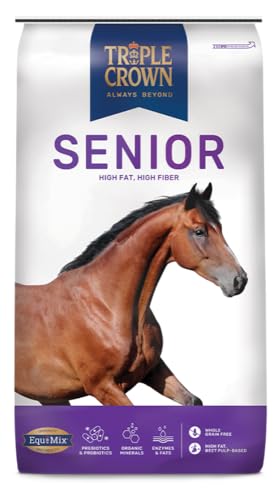
Triple Crown Triple Crown Senior Horse Feed
High-fat, high-fiber soakable complete feed for older horses
How to Feed Carrots to a Horse
The single most important rule is how you cut them. Slice carrots lengthwise into long sticks, not into round coins. A round slice is a textbook choke hazard, because a horse can suck the disc to the back of its throat where it lodges in the esophagus. Long sticks are easier to chew and safer to swallow. Offer carrots by hand on a flat palm or drop them in a feed tub, and keep them as a clear extra.
How Much Is Safe
Treats belong at the margins of the diet, which is built around forage. For a healthy senior, a couple of carrots a day is fine. The problem is volume: a daily bagful turns a wholesome treat into a meaningful source of sugar that can work against a metabolic horse. Keep carrots measured, and if you treat heavily for training or to hide medication, switch to a low-sugar commercial treat so sugar does not pile up.
Risks to Watch For
- Choke: round carrot coins are a leading cause, especially in seniors with worn teeth.
- Sugar: carrots are lower in sugar than apples but not sugar-free, so they add up for metabolic horses.
- Dental strain: firm carrots are hard for a compromised mouth to grind.
The Senior Horse Note
For a metabolic senior, carrots sit in a gray zone. They are lower in sugar than apples, so an occasional small carrot is unlikely to harm most PPID or EMS horses, but a daily habit adds up. If your horse is laminitis-prone or its metabolic disease is not well controlled, treat carrots like apples and limit or skip them, leaning on a low-sugar treat instead.
Dental disease compounds the choke risk. A senior with worn or missing teeth cannot grind a firm carrot, and bolted chunks can lodge in the throat. Cut carrots small or grate them for horses with bad teeth, and treat any difficulty with firm vegetables as a prompt to schedule a dental exam. Horses that quid or drop feed are telling you their mouth needs attention.
The Bottom Line
Carrots are safe for most healthy horses in moderation, as long as you cut them into long sticks to prevent choke. They are lower in sugar than apples but still a treat to limit for metabolic seniors, and a real choke risk for horses with poor teeth. Cut them small, keep amounts modest, and let your veterinarian guide what fits a horse with PPID, EMS, or laminitis.
Senior Horse Care Planner
Track your senior horse's vital signs, feed and body condition, farrier and dental schedule, medications, and quality of life, all in one printable planner.
Pet Insurance · Sponsored
Have a Dog or Cat at Home Too? Protect Them From Surprise Vet Bills
Most horse owners share their home with a dog or cat as well, and one emergency visit can run into the hundreds or thousands. Pet insurance can help cover surprise vet bills so a sudden cost does not force a hard choice. Get a free quote and see what coverage fits your household.
Frequently Asked Questions
Can horses eat carrots?
Yes, healthy horses can eat carrots in moderation, and most love them. Carrots are a classic, traditional horse treat. Feed them in small amounts, cut lengthwise into sticks rather than coin-shaped discs to reduce choke risk, and treat them as an extra on top of a forage-first diet. For a metabolic senior, limit carrots because they still carry sugar, and ask your vet what fits your horse's plan.
Are carrots safe for a horse with Cushing's or EMS?
Carrots are lower in sugar than apples but are not sugar-free, so they should be limited for horses with PPID, EMS, or insulin dysregulation. A single small carrot now and then is unlikely to cause harm in most metabolic horses, but a daily bagful adds meaningful sugar. If your senior is laminitis-prone or has uncontrolled metabolic disease, skip carrots or use a low-sugar treat and confirm with your vet.
How should I cut carrots for a horse?
Cut carrots lengthwise into long sticks rather than into round coins. Round slices are the classic choke hazard, because a horse can suck a disc to the back of the throat where it can lodge in the esophagus. Long sticks are easier to chew and safer to swallow. For a senior with poor teeth, cut carrots small or grate them, since worn teeth cannot grind firm vegetables well.
How many carrots can I feed my senior horse?
A couple of carrots a day is fine for most healthy seniors, and less for metabolic horses. Carrots are a treat, not a feed, so keep them to a small fraction of the daily ration and build the diet around forage. Large quantities add sugar and can displace balanced nutrition. If you treat heavily for training or bonding, switch to a low-sugar commercial treat so you are not overloading sugar.
Can carrots cause choke in older horses?
Yes, carrots are one of the more common causes of choke, especially round slices and especially in seniors with dental disease. A worn mouth cannot grind firm carrot well, and a horse that bolts chunks it cannot chew is at risk. Cut carrots into long sticks or small pieces, grate them for horses with bad teeth, and never feed carrots to a horse that gulps without chewing.
Are carrots good for horses nutritionally?
Carrots provide beta-carotene, which horses convert to vitamin A, along with fiber and water. In treat-sized amounts they are a wholesome reward, but they are not a significant source of nutrition and should not be relied on to balance a diet. A forage-first diet plus a ration balancer covers a senior's vitamin and mineral needs far more reliably than treating with carrots ever could.
Need more help with your senior horse?
Browse our guides by topic to find practical solutions.
Wellness Planner: $39