Coping With the Euthanasia Decision
The emotional weight of choosing euthanasia for a beloved horse: guilt, second-guessing, the last kind gift, and finding self-compassion afterward.
Choosing to euthanize a horse is one of the heaviest decisions an owner will ever carry. You are not only saying goodbye to a companion, you are taking responsibility for the timing of his death, and that weight can feel almost unbearable. If you are wrestling with guilt, doubt, and grief, please know that these feelings are a measure of your love, not a sign that you are doing anything wrong.
This guide is about the emotional side of the decision: how to carry it, how to quiet the second-guessing, and how to be gentle with yourself afterward. The practical and medical questions belong with your equine veterinarian, who is also a steady source of compassion through this. Here, we simply want to keep you company in a very hard place.
The Weight of Choosing
With horses, as with few other animals, we are often the ones who decide when life ends. That power is a burden precisely because we love them. It can feel presumptuous, even frightening, to make such a final call. But it helps to remember why the choice exists: a horse in genuine, unrelievable suffering cannot tell us he is ready, and he cannot understand pain as temporary. The ability to spare him is not a curse. It is the last responsibility of guardianship.
Guilt and Second-Guessing
Almost every owner replays the decision afterward. Did I wait too long? Did I act too soon? Was there one more thing I could have tried? This second-guessing is natural, and it can be relentless. But it is important to recognize it for what it is: the echo of love, not proof of a mistake. You made the best decision you could, with your veterinarian's guidance and your knowledge of your horse, in circumstances you did not choose. That is all any of us can do.
The Last Kind Gift
Many owners find comfort in reframing euthanasia not as something done to a horse, but as something done for him. After a lifetime of trust, work, and companionship, a peaceful passing free of fear and pain is the one thing we can give back at the very end. It is the last kind gift. This framing does not erase grief, and it should not. But it can loosen the grip of guilt, reminding you that letting go gently is itself an act of devotion.
Weighing Quality of Life Objectively
Emotion makes it hard to see clearly, which is exactly why objective tools matter. A structured quality of life scale, honest daily notes, and your veterinarian's assessment together give you something firmer than fear to stand on. They help you separate your dread of the loss from the real question, which is whether your horse is still enjoying his days. For a careful framework, see our quality of life scale for horses. When the good days fade and pain mounts, the numbers can give you permission to do what your heart already suspects is right.
| What to Consider | A Gentle Question to Ask |
|---|---|
| Pain | Is his pain controlled, or is it winning despite medication? |
| Appetite | Does he still look forward to food, or has he turned away? |
| Mobility | Can he move, lie down, and rise without struggle or fear? |
| Joy | Does he still greet his herd, his routine, and you? |
| Good days versus bad | Honestly, which kind of day is he having more often now? |
Involving Family and the Vet
You do not have to carry this alone. Including family, in an age-appropriate way, lets everyone share the weight and say goodbye. Older children and adults may want a voice and a chance to be present, while younger children need simple, honest words and a choice about taking part. Your veterinarian is an essential partner here too, offering not just medical facts but the reassurance of someone who has guided many families through the same decision. Ask them your hardest questions. They will not judge you for them.
Making the Day Peaceful
When the day comes, planning ahead lets you give your full attention to your horse rather than to logistics. Choose a quiet, familiar place, keep things calm, and have a trusted friend nearby. Offer favorite treats, a gentle grooming, soft words. Talk with your vet beforehand about what to expect so nothing catches you off guard. Many owners find that a small ritual, a few quiet sentences, or simply a hand on the neck helps. Let the day be slow and tender, shaped entirely around him.
Self-Compassion Afterward
The grief that follows can be enormous, and it deserves room. Let yourself feel it fully rather than rushing to be fine. Treat yourself with the same kindness you would offer a friend in your position, because you made a loving choice under painful circumstances. Lean on people who understand the bond with a horse, and revisit the whole life you shared rather than fixing on the final day. For the longer road of mourning, our guide to grief after losing a horse can walk alongside you.
If guilt or grief becomes overwhelming, please reach out to a counselor or a pet-loss support line. Healing is not linear, and it is not something you have to manage alone. The love that made this decision so hard is the same love that will, in time, let you remember your horse with more tenderness than pain.
Related Senior Horse End of Life Guides
- A Quality of Life Scale for Senior Horses - An objective framework for a hard decision.
- When to Euthanize a Horse - Recognizing when the time has come.
- Horse Euthanasia: What to Expect - Understanding the process to ease the day.
- Grief After Losing a Horse - Compassionate support for the days that follow.
Frequently Asked Questions
How do I cope with deciding to euthanize my horse?
Be gentle with yourself, because this is one of the hardest choices an owner makes. Lean on your veterinarian for honest guidance, use a quality of life scale to ground the decision in facts rather than fear, and remember that choosing to end suffering is an act of love, not failure. Talk it through with people who understand, allow yourself to grieve, and try to focus on the years of good care you gave rather than the single hard day at the end.
Why do I feel so guilty about euthanizing my horse?
Guilt is almost universal, and it comes precisely because you love your horse and feel responsible for him. The mind asks whether you acted too soon or waited too long, whether you missed something. These thoughts are natural, but they are not evidence that you did wrong. Choosing to spare a horse from suffering, when his quality of life has genuinely declined, is the kindest use of that responsibility. Guilt reflects the depth of your bond, not a failure of your judgment.
How do I know I am not deciding too soon?
Rely on objective measures rather than the dread of being early. A quality of life scale, honest daily notes on eating, comfort, and good days versus bad, and your veterinarian's assessment together give you a clear picture. The old saying is that it is kinder a week too early than a day too late, because a horse cannot understand suffering, only feel it. If pain is mounting and good days are fading, you are not acting too soon. You are acting in time.
What does the last kind gift mean?
It is a way of seeing euthanasia not as something done to a horse, but for him. After a lifetime of carrying us, trusting us, and giving us their work and companionship, the one thing we can give in return at the end is a peaceful passing free of fear and pain. Framing the decision as the last kind gift does not erase the grief, but it can ease the guilt, reminding you that letting go gently is the final act of a loving partnership.
Should my family or children be involved in the decision?
Including family, in an age-appropriate way, often helps everyone grieve and feel heard. Adults and older children may want a voice in the decision and a chance to say goodbye. Younger children need honest, simple language and a choice about whether to be present. Sharing the decision spreads the emotional weight and lets the whole family honor the horse together. Your veterinarian can help explain quality of life in terms that make the reasons clear and compassionate for everyone.
How can I make the day itself peaceful?
Plan ahead so the day is calm rather than chaotic. Choose a quiet, familiar spot, keep the surroundings peaceful, and have a trusted friend present for support. Offer your horse favorite treats and gentle grooming beforehand, speak softly, and stay close if you feel able. Talk with your veterinarian in advance about what to expect so nothing surprises you. Many owners find comfort in a small ritual or quiet words. Let it be unhurried, tender, and centered entirely on your horse.
How do I forgive myself afterward?
Self-compassion takes time and practice. Remind yourself that you made the decision out of love and on the best information you had, with your vet's guidance. Let yourself grieve fully rather than rushing past it, and lean on people who understand the bond with a horse. Focus on the whole life you shared, not the final day. If guilt lingers heavily or grief becomes overwhelming, reach out to a counselor or a pet-loss support resource. Healing comes gradually, and you do not have to do it alone.
Need more help with your senior horse?
Browse our guides by topic to find practical solutions.
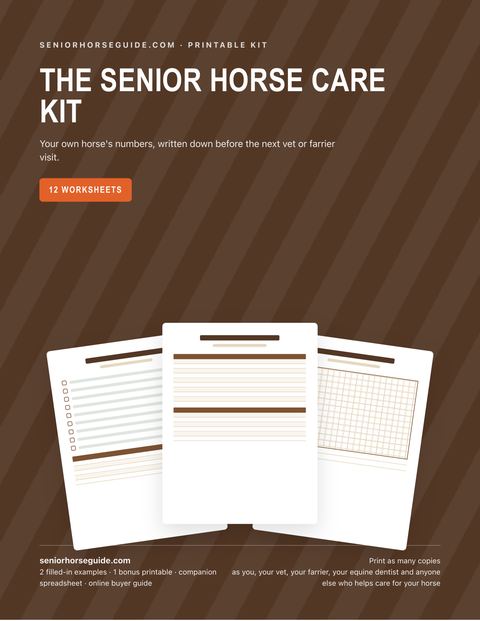
Senior Horse Care Kit: $24