Dental Care for Senior Horses: A Complete Guide
How to care for an older horse's teeth: yearly exams, floating, recognizing dental problems, feeding around worn teeth, and when to call the vet or equine dentist.
Dental health is one of the most overlooked yet most important parts of caring for an older horse. A horse's teeth wear down over a lifetime of chewing forage, and by the senior years many horses are running short of tooth, developing sharp points and uneven surfaces, or losing teeth altogether. Because a horse must grind its food thoroughly to digest it, poor dental health quickly shows up as weight loss, dropped feed, and discomfort. The good news is that with regular dental exams and the right diet, most seniors can stay comfortable and well fed despite an aging mouth.
This guide covers how the horse's mouth changes with age, the signs of trouble to watch for, what dental care involves, and how to feed a horse whose teeth are no longer up to long hay. None of it replaces an exam by your equine veterinarian or qualified equine dentist, who can see and feel what no owner can from outside the mouth.
Senior Horse Dental Support
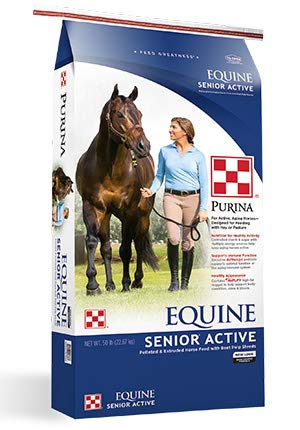
Purina Active Senior Horse Feed
Pelleted complete senior feed designed to be easy to chew and digest.
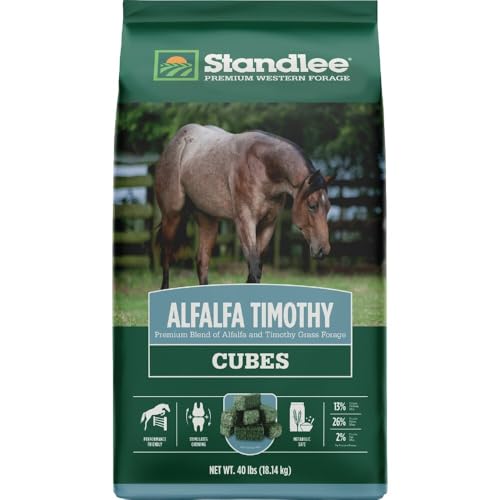
Standlee Alfalfa Timothy Hay Cubes
Soakable cubes that deliver chewable forage for horses with worn teeth.

How the aging mouth changes
Horse teeth are unusual: they erupt continuously throughout life, slowly pushing up from the gum to replace the surface worn away by chewing. This works beautifully for decades, but the supply of tooth, called the reserve crown, is finite. By old age many horses are running low. Teeth may become smooth and ineffective at grinding, work loose in the socket, or fall out, leaving gaps. The grinding surfaces often wear unevenly, creating waves, hooks, and ramps that further reduce chewing efficiency. The result is a mouth that simply cannot process long-stem hay the way it once did.
Signs of dental problems
Horses are stoic and hide oral pain well, so owners must watch for subtle changes:
- Quidding. Dropping balls of partly chewed hay is a classic sign that the horse cannot grind forage properly.
- Slow or messy eating. Taking far longer over a meal, tilting the head, or dropping grain.
- Weight loss. Losing condition despite a good appetite is a major red flag for dental trouble.
- Whole fiber in manure. Long, undigested hay stems or whole grain in the droppings show food is not being chewed.
- Bad breath and discharge. A foul odor or nasal discharge can point to infection or a diseased tooth.
Any of these signs warrants a dental exam. The earlier a problem is found, the more options there are to keep the horse comfortable and eating well.
What dental care involves
Routine senior dental care centers on a thorough oral exam, ideally at least once a year and sometimes every six months. Under sedation, a vet or equine dentist uses a full-mouth speculum and a good light to examine and feel every tooth. They float, or file down, the sharp enamel points that form on the cheek edges and cause cheek and tongue ulcers. In a senior, floating is done conservatively because there is less tooth to spare. The exam also looks for loose teeth, gaps where feed packs and rots, gum disease, and painful conditions like EOTRH of the incisors. Radiographs may be needed to assess a tooth root, and some diseased teeth are best extracted.
| Sign | Possible dental cause | Action |
|---|---|---|
| Quidding hay | Worn, missing, or painful teeth | Dental exam, switch to hay replacers |
| Weight loss | Poor chewing efficiency | Exam plus easy-to-chew complete feed |
| Foul odor | Diastema, infection, EOTRH | Veterinary exam and treatment |
| Head tilting while eating | Sharp points or a sore tooth | Floating or extraction as needed |
Feeding around worn teeth
When a horse can no longer chew long hay effectively, the answer is to provide fiber in a form that needs little grinding. Soaked hay cubes, hay pellets, beet pulp, and complete senior feeds formulated to replace forage all deliver the fiber a horse must have, without demanding a strong grind. Soaking these feeds into a soft mash makes them easy to eat and adds water, which helps prevent choke and supports hydration. Many old horses thrive on a diet of soaked hay replacers and a complete senior feed once long hay becomes too hard to manage. Make any change gradually and ideally with input from your vet or an equine nutritionist.
Senior Horse Care Planner
Track your senior horse's vital signs, feed and body condition, farrier and dental schedule, medications, and quality of life, all in one printable planner.
Working with your vet or equine dentist
Both equine veterinarians and qualified equine dental technicians perform routine care, but veterinary involvement matters most for a senior with complex teeth. A vet can sedate the horse for a complete exam, take radiographs, diagnose disease deep in the tooth, and extract problem teeth. For a horse losing weight, quidding, or showing mouth pain, a proper diagnosis is essential, because the source of the trouble is often hidden from a simple look. Schedule regular exams, watch your horse's eating closely between them, and adjust the diet as the mouth changes. With attentive dental care, even a horse with very few good teeth can stay comfortable and hold its condition through the senior years.
Pet Insurance · Sponsored
Have a Dog or Cat at Home Too? Protect Them From Surprise Vet Bills
Most horse owners share their home with a dog or cat as well, and one emergency visit can run into the hundreds or thousands. Pet insurance can help cover surprise vet bills so a sudden cost does not force a hard choice. Get a free quote and see what coverage fits your household.
Frequently Asked Questions
How often should a senior horse have a dental exam?
Most older horses benefit from a thorough oral exam by an equine veterinarian or qualified equine dentist at least once a year, and some need checks every six months. Senior teeth wear unevenly, develop sharp points, and can loosen or fall out, so problems appear faster than in younger horses. Regular exams catch trouble before it affects chewing, weight, and comfort.
Why are a horse's teeth different in old age?
Horse teeth erupt continuously through life and are slowly worn down by chewing forage. By the senior years the reserve crown is running out, teeth can become smooth, loose, or be lost entirely, and the grinding surface often becomes uneven. This makes chewing less efficient, which is why so many old horses struggle to process long hay and need diet adjustments to keep weight on.
What are the signs of dental trouble in an older horse?
Watch for dropping balls of partly chewed hay, called quidding, slow eating, tilting the head while chewing, weight loss, undigested grain or long fiber in the manure, foul mouth odor, and reluctance to eat hay while still wanting softer feed. Any of these warrants a dental exam. Because horses hide discomfort, subtle eating changes are often the earliest clue.
What is floating and does my old horse still need it?
Floating is the filing down of the sharp enamel points that form on the edges of horse teeth. Many seniors still need periodic floating, but the approach is gentler than in young horses because there is less tooth to work with. Some very old horses with worn or missing teeth need little floating and more diet management. Your vet or equine dentist will tailor the work to the mouth they find.
Can a horse with bad teeth still eat hay?
A horse that can no longer chew long hay effectively often does better on soaked hay replacers like hay cubes, hay pellets, beet pulp, or a complete senior feed designed to be the entire ration. These provide the fiber a horse needs in a form that does not require strong grinding. The goal is to keep fiber intake up while removing the chewing demand the worn mouth cannot meet.
Do senior horses get cavities or gum disease?
Yes. Older horses can develop infundibular cavities, diastema where feed packs between teeth and rots, periodontal gum disease, and a painful condition called EOTRH that affects the incisors. These are genuinely painful and can cause weight loss and reluctance to eat. They need diagnosis and treatment by an equine veterinarian, sometimes including extraction of affected teeth.
Should I see a vet or an equine dentist?
Both can perform routine dental care, but an equine veterinarian can sedate the horse for a thorough exam, take radiographs, diagnose disease, and extract teeth when needed. Many owners use a vet or a qualified equine dental technician working under veterinary involvement. For a senior with complex dental disease, veterinary diagnosis is important, since pain and infection deep in the tooth are not visible from a simple look.
Need more help with your senior horse?
Browse our guides by topic to find practical solutions.
Wellness Planner: $39