Whole vs Processed Feeds for Senior Horses
Whole grains vs processed senior feed for older horses: chewability, digestion, mineral balance, cost, and which suits poor teeth, weight loss, or metabolic needs.
There is a romantic appeal to feeding an old horse a simple bucket of whole oats the way generations did before bagged feeds existed. But aging changes what a horse can chew and digest, and the realities of worn teeth, muscle loss, and metabolic disease often call for something more engineered. This comparison weighs whole grains against modern processed senior feeds, looking at chewability, digestion, mineral balance, and cost, so you can decide what actually serves your older horse best.
Body condition, dental health, and any metabolic diagnosis should drive the choice. Use this as a guide and confirm the plan with your vet or an equine nutritionist.
Whole and Processed Feed Options

Country Heritage Country Heritage Whole Oats
Traditional whole oats as a calorie source for seniors with good teeth, balanced with minerals.
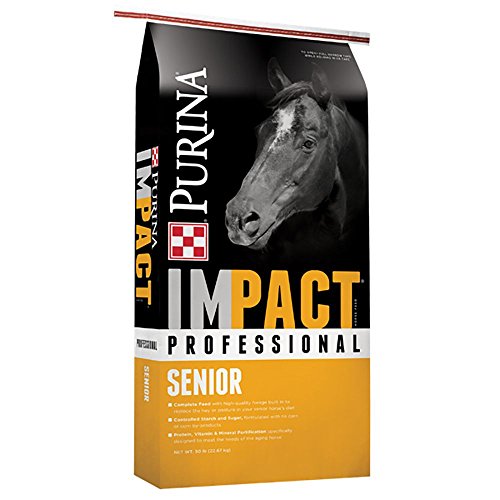
Purina Purina Impact Senior Feed
Processed, soakable complete senior feed formulated and fortified for older horses.
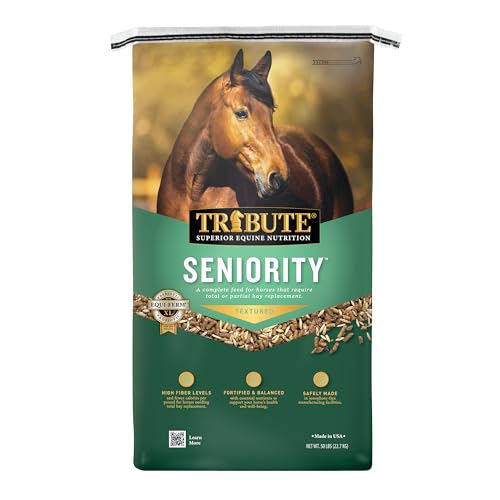
Kalmbach Feeds Kalmbach Tribute Maturity Senior Feed
Textured complete senior feed with balanced protein, fat, vitamins, and minerals.

Triple Crown Balancer (Ration Balancer)
Balancer to correct the mineral gaps if you feed whole grain to a sound-toothed senior.
What Whole Grains Offer
Whole grains such as oats are feed in their natural state, hull and all. They are inexpensive, widely available, and among the safer cereal grains for horses. For an older horse with healthy teeth that simply needs extra calories on top of good forage, whole oats can be a reasonable energy source. The catch is that grain alone is nutritionally unbalanced. Oats are low in several key minerals and skewed in their calcium to phosphorus ratio, so a horse fed grain still needs a balancer or mineral supplement to round out the diet.
What Processed Senior Feeds Offer
Processed senior feeds are manufactured to solve the problems aging creates. Grains and fibers are ground, cooked, extruded, or pelleted to improve digestibility, then fortified with the full range of vitamins and minerals a horse needs. Most are designed to soak into a soft mash, which is crucial for a horse with reduced chewing ability. Many also carry enough built-in fiber to partly or fully replace hay. In short, they are complete, digestible, and chewable, which is exactly what a compromised senior gut and mouth require.
Whole vs Processed Compared
| Factor | Whole Grains | Processed Senior Feed |
|---|---|---|
| Chewability | Hard for poor teeth | Easy, often soakable |
| Digestibility | Lower if unchewed | Higher, pre-processed |
| Nutrient balance | Unbalanced alone | Complete and fortified |
| Replaces hay? | No | Often, partly or fully |
| Cost per bag | Lower | Higher |
| Best for | Sound-toothed seniors | Poor teeth, weight loss |
How to Decide
Let the mouth and the body lead. A senior with good teeth that holds condition on forage may do fine on a modest amount of whole oats plus a ration balancer, which can save money. But a horse that quids, drops weight, loses topline, or has a metabolic condition is usually better served by a purpose-built processed senior feed that is balanced, digestible, and easy to chew. The more compromised your horse's teeth and digestion, the more the processing earns its place.
The Bottom Line
Whole grains are simple and cheap and can work for a sound-toothed senior on good forage, as long as you balance the minerals. Processed senior feeds cost more but deliver complete, digestible, chewable nutrition designed around the limitations of an aging horse, which is why they suit most seniors with worn teeth, weight loss, or metabolic needs. Choose by your horse's dental health and body condition, transition gradually, and let your vet help you balance the ration.
Frequently Asked Questions
What is the difference between whole grains and processed senior feed?
Whole grains like oats are fed in their natural, intact form with the hull on. Processed senior feeds are manufactured: grains and fibers are ground, cooked, extruded, or pelleted, then fortified with vitamins and minerals and often softened for easy chewing. Whole grains are simpler and cheaper but unbalanced on their own and hard for a poor-toothed horse to chew. Processed senior feeds are formulated to be complete, soakable, and digestible, which is why they dominate senior nutrition.
Are whole oats a good feed for an older horse?
They can be a useful calorie source for a senior with good teeth, but they are not a complete diet. Oats provide energy and are relatively safe among grains, yet they are low in key minerals and unbalanced in calcium to phosphorus, so a horse on oats still needs a ration balancer or mineral supplement. For a senior with worn teeth, whole oats are hard to chew and poorly digested. Many older horses do better on a processed senior feed built for their needs.
Why are processed senior feeds easier to digest?
Processing breaks down the tough outer structures of grains and fibers so the horse's gut can access the nutrients more readily, and cooking or extruding can improve starch digestion in the small intestine. Many senior feeds are also ground fine and made to soak into a mash, which matters enormously for a horse with reduced chewing ability or a slower digestive tract. For an aging horse whose teeth and gut are not what they were, that pre-digestion is a real advantage.
Is processed feed less natural or less healthy?
Not for a senior. While a young, healthy horse on good pasture may thrive on simple forage and minimal grain, an older horse with worn teeth, muscle loss, or a metabolic condition often cannot extract enough from whole feeds. Processed senior feeds are designed around exactly those limitations, delivering balanced, digestible, chewable nutrition. The goal in senior nutrition is meeting the horse's needs, and for many older horses a well-formulated processed feed does that far better than raw grain.
Can I just add a balancer to whole grains instead of buying senior feed?
For a senior with sound teeth that holds weight well, whole grain plus a ration balancer on a good forage base can work and may save money. The catch is chewing and completeness: a horse that quids cannot manage whole grain, and you must balance the minerals correctly. If your horse is losing weight, losing topline, or struggling to chew, a purpose-built complete senior feed usually does the job more reliably. An equine nutritionist or your vet can help you compare.
How do I switch from whole grain to a processed senior feed?
Transition gradually over 7 to 10 days, mixing increasing amounts of the new feed with decreasing amounts of the old to let the gut adjust. Read the new feed's directions, since complete senior feeds are fed at much higher rates than a scoop of oats, and weigh the feed rather than guessing by volume. Soak it if your horse has dental or choke concerns, split large amounts into several meals, and monitor body condition over several weeks, adjusting with your vet's input.
Need more help with your senior horse?
Browse our guides by topic to find practical solutions.
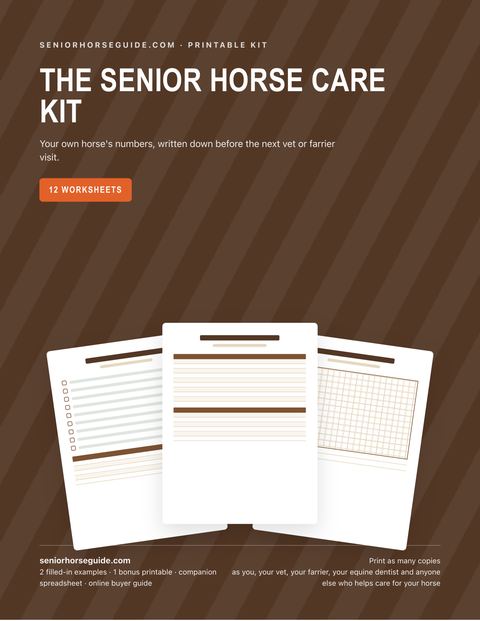
Senior Horse Care Kit: $24