Senior Mustang Care: A Complete Guide
Caring for an aging Mustang: managing the thrifty easy-keeper metabolism, obesity and laminitis risk, unknown ages, and hoof and dental health for these hardy range-bred horses.
Mustangs are America's wild-bred horses, shaped by generations of natural selection into tough, sound, efficient animals. A gentled Mustang makes a hardy and devoted senior, but the same thrifty constitution that let its ancestors thrive on the range becomes a challenge in domestic life, where rich feed and limited movement can tip an easy keeper into obesity and metabolic disease. Caring for an aging Mustang means working with its nature: lean weight, low-sugar forage, plenty of movement, and good feet. This guide covers the priorities, including the practical reality that many Mustangs come with an unknown age.
Senior Mustang Care Essentials

Kent / Blue Seal Low Sugar Low Starch Senior Feed
Metabolic-friendly feed for a thrifty easy-keeper Mustang.

Weaver Leather Slow Feed Hay Net
Mimics natural trickle grazing while controlling intake for an easy keeper.


Cosequin Cosequin ASU Joint Supplement
Glucosamine and chondroitin support for aging joints.
Typical lifespan and a hardy constitution
Mustangs commonly live 25 to 30 years and sometimes longer in domestic care. Natural selection on the range favored efficient metabolisms, sound feet, and resilient constitutions, all of which serve a Mustang well in old age. The flip side is that this thriftiness, an asset on sparse grazing, becomes a liability amid the abundance of domestic horse keeping. The horses that age best are those kept close to their natural pattern: lean, well exercised, and on modest, low-sugar forage rather than a rich, calorie-dense diet.
The thrifty metabolism and its risks
Mustangs evolved to extract maximum energy from poor forage and to cover many miles a day finding it. Put that metabolism on lush pasture with generous feeding and little movement, and obesity follows readily, bringing insulin dysregulation, equine metabolic syndrome, and the laminitis they cause. With age, PPID adds further risk, as it does in all older horses. The management answer is to recreate the range pattern as much as possible: low-sugar forage in modest amounts, fed little and often, with as much turnout and movement as you can provide and a genuinely lean body condition. Resist the urge to see a well-padded Mustang as a healthy one.
Caring for a horse of unknown age
Many Mustangs come through adoption with no birth records, so their exact age is a mystery. A vet can estimate age from dental wear, but this grows less precise as a horse gets older. Rather than fixating on a number, manage by what you can observe: body condition, dental health, energy, coat, and soundness. Treat your Mustang as a senior once the signs appear, graying around the muzzle and eyes, deepening hollows above the eyes, dental wear, and a growing need for careful weight and joint management. The horse's body, not its paperwork, tells you what care it needs.
| Concern | Why Mustangs are prone | Senior care focus |
|---|---|---|
| Obesity / EMS | Thrifty range metabolism, rich diet | Low-sugar forage, lean weight, movement |
| Laminitis | Insulin spikes from easy weight gain | Limit grass, muzzle, monitor feet |
| Unknown age | Adopted with no records | Manage by body condition and signs |
| Dental wear | Age, not breed specific | Yearly exams, soaked feeds if needed |
Feeding and hoof care
Most senior Mustangs need no grain. Build the diet on low-sugar, low-starch forage served in a slow-feed net to mimic the trickle grazing they are built for, and add a ration balancer to cover vitamins and minerals without surplus calories. Limit lush pasture and sugary treats, and use a grazing muzzle when turnout is rich. As teeth wear with age, transition to soaked hay cubes and a complete senior feed. On the feet, Mustangs are famous for hard, well-shaped hooves, and many stay barefoot and sound, but a senior still needs regular farrier care and vigilance for metabolic laminitis given the easy-keeper tendency. Good feet are an advantage to maintain, not a reason to skip trims.
Daily management and quality of life
The lifestyle that suits a Mustang is, conveniently, excellent senior horse management. These hardy horses thrive on full turnout, companionship, and constant movement, all of which protect their joints and metabolism. Provide shelter from wind and wet and extra forage in cold weather, since fermenting hay generates warmth, and add a blanket only if an older horse loses condition or its coat thins. Support aging joints with daily movement and a glucosamine and chondroitin supplement as needed, and keep up yearly dental exams. Manage your Mustang lean, moving, and close to its natural pattern, and partner with your equine vet and farrier, and this tough, willing horse can enjoy a long and comfortable old age.
Frequently Asked Questions
How long do Mustangs live?
Mustangs are hardy and often long-lived, commonly reaching 25 to 30 years and sometimes beyond in domestic care. Generations of natural selection on the range produced tough horses with generally sound feet and efficient metabolisms. A gentled Mustang kept at a sensible weight with good dental and hoof care often ages well. The main challenges are metabolic, since their thrifty constitution can struggle with the rich diet of domestic life, and managing horses whose exact age is unknown.
Why are Mustangs prone to becoming overweight?
Mustangs evolved to survive on sparse, scattered forage and to travel many miles a day for it. In domestic life with rich pasture, generous feeding, and limited movement, that thrifty metabolism readily leads to obesity, insulin dysregulation, and equine metabolic syndrome, which raise laminitis risk. The fix is to manage them closer to their natural pattern: low-sugar forage in modest amounts, lots of movement, limited rich grass, and a lean body condition rather than a well-padded one.
Are Mustang feet really tougher than other horses?
Mustangs are known for hard, well-shaped feet, the product of natural selection over many miles of rough terrain, and many stay barefoot and sound. That said, domestic conditions of soft footing and less movement can change hoof quality over time, and a senior Mustang still needs regular farrier care. Good feet are an advantage, not a reason to skip trims. Keep a regular schedule, watch for metabolic laminitis given their easy-keeper tendency, and support hoof health as needed.
How do I care for a Mustang whose age I do not know?
Many Mustangs come through adoption with no birth records, so their exact age is uncertain. Your vet can estimate age from dental wear, though this becomes less precise in older horses. Rather than focusing on the number, manage by body condition, dental health, energy, and soundness. Treat the horse as a senior once you see the signs: graying around the face, deepening hollows above the eyes, dental wear, and a need for more careful weight and joint management.
How should I feed a senior Mustang?
Most Mustangs are easy keepers that need no grain. Base the diet on low-sugar, low-starch forage offered in a slow-feed net to mimic trickle grazing, and add a ration balancer for vitamins and minerals without excess calories. Limit lush pasture and sugary treats, and use a grazing muzzle if turnout is rich. As teeth wear with age, move to soaked feeds. Keep the horse lean and moving, which suits both its metabolism and its history.
Do Mustangs handle weather and turnout well as seniors?
Generally yes. Their range heritage made them hardy and well adapted to living outdoors with shelter, and most senior Mustangs thrive on full turnout, companionship, and constant movement, which benefits their joints and metabolism. Provide shelter from wind and wet, plenty of forage in cold weather, and a blanket only if an older horse loses condition or its coat thins. The natural, outdoor lifestyle that suits a Mustang also happens to be ideal senior horse management.
Need more help with your senior horse?
Browse our guides by topic to find practical solutions.
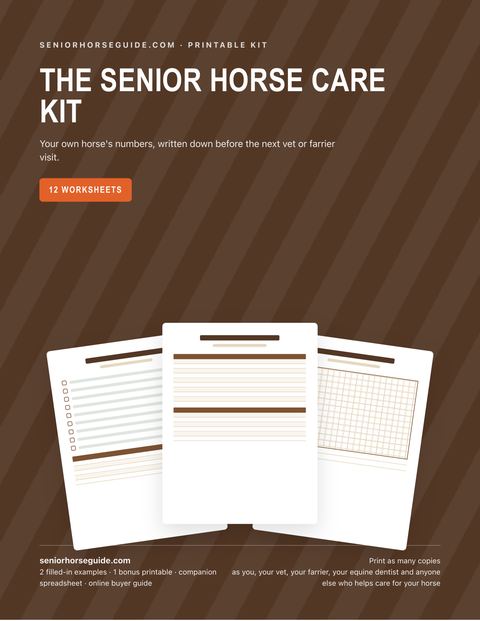
Senior Horse Care Kit: $24